

The Terasem Colloquium on December 14, 2025, explored recent developments in Artificial Intelligence (AI) and future prospects.
This video is also on YouTube.
December 14 is the anniversary of the last day with astronauts on the Moon. Apollo 17 astronauts Gene Cernan and Harrison Schmitt launched back to Earth from the Moon on December 14, 1972. Cernan’s biography is titled “The Last Man on the Moon.”
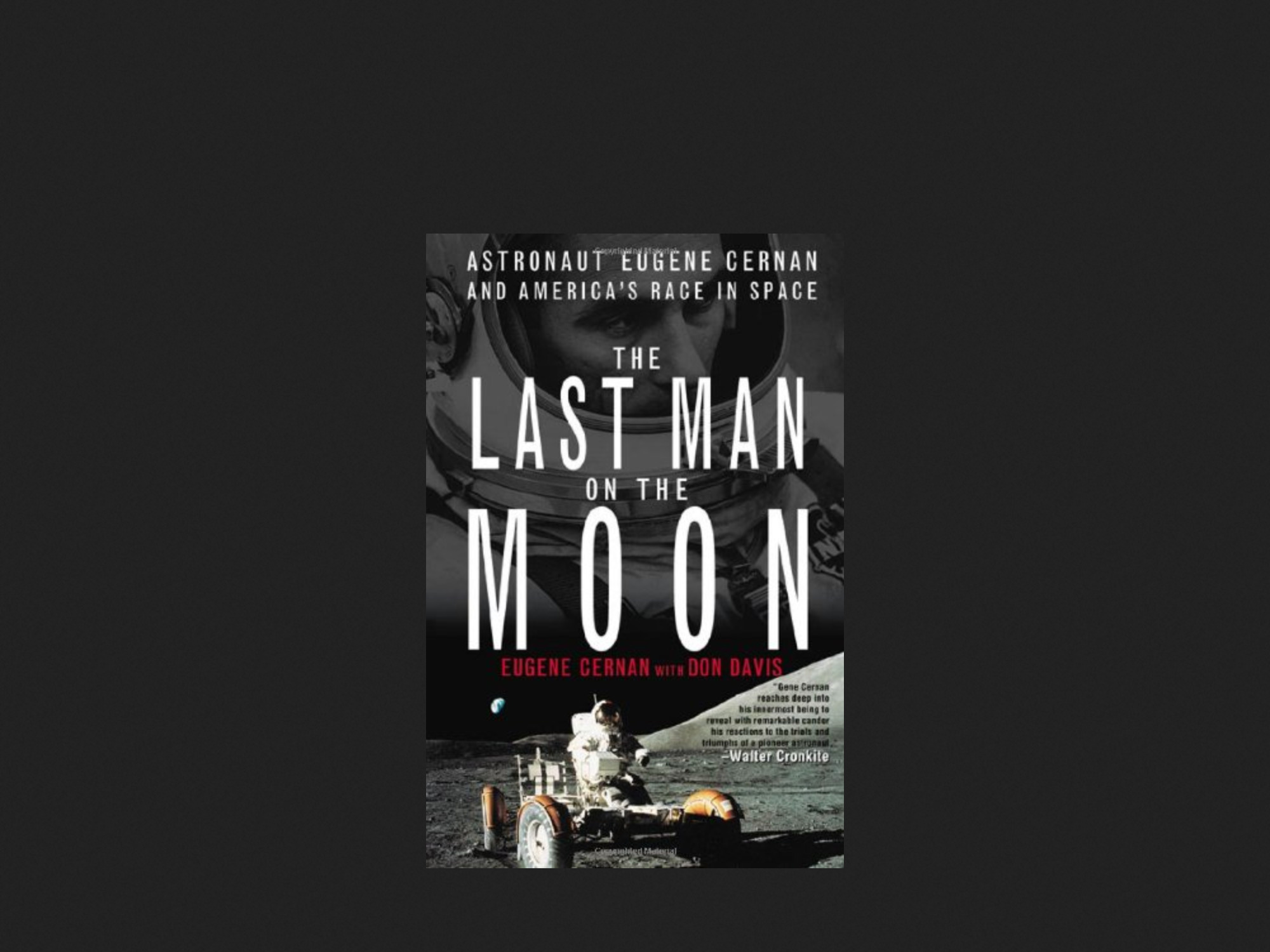
I hope we’ll soon have to change the date of the Terasem Colloquium in December! In fact we are going back to the Moon, and this time we are going back to stay.
The speakers - David Orban, David Pearce, Natasha Vita-More, David Brin, and Gregory Stock, explored the question: Where is AI, and where is it going?
This Terasem Colloquium followed the previous one on July 20, dedicated to space expansion in the age of AI, and in particular to the related question: Should we still want to send human astronauts to colonize space? Or should we want to leave space expansion to AI? AI is poised to play a big (and in the long term dominant) role in the expansion of humanity into space.
Like in July’s Colloquium, the speakers engaged in interesting discussions with each other and with the audience.
We also published Terasem’s Journal of Personal Cyberconsciousness, Volume 13, Issue 2 – 2025. This issue includes my review of Gregory Stock’s last book “Generation AI and the Transformation of Human Being” published by Nquire Media, and an article by David Brin about his own forthcoming book on AI. It also includes an edited AI-generated summary of the July 20 Terasem Colloquium.
I opened the Colloquium, highlighting its focus on space exploration and artificial intelligence, which are related. I emphasized the need to consider AI as an integral part of space expansion and suggested that future AI systems should be seen as human persons.
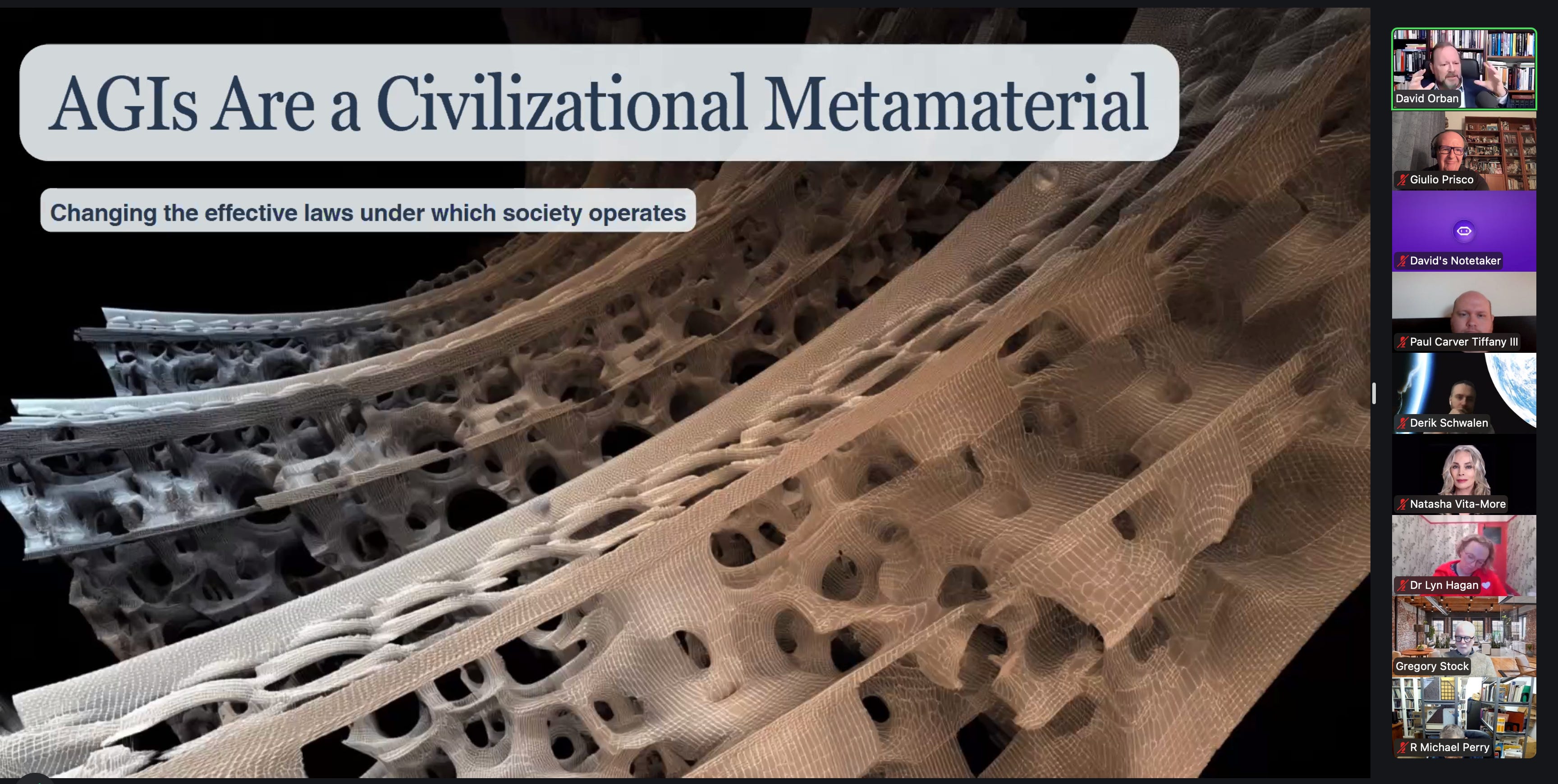
David Orban discussed the impact of artificial general intelligence (AGI) at the civilizational level and presented a framework for understanding AGI’s development. He noted the rapid improvement in AI performance, and suggested that the technological singularity is approaching.
David Pearce presented his views on the “phenomenal binding problem,” arguing that current AI architectures cannot solve it, and that without new physics (e.g. strong emergence) machines couldn’t achieve consciousness. The discussion touched on the implications of these ideas for the future of AI and consciousness.
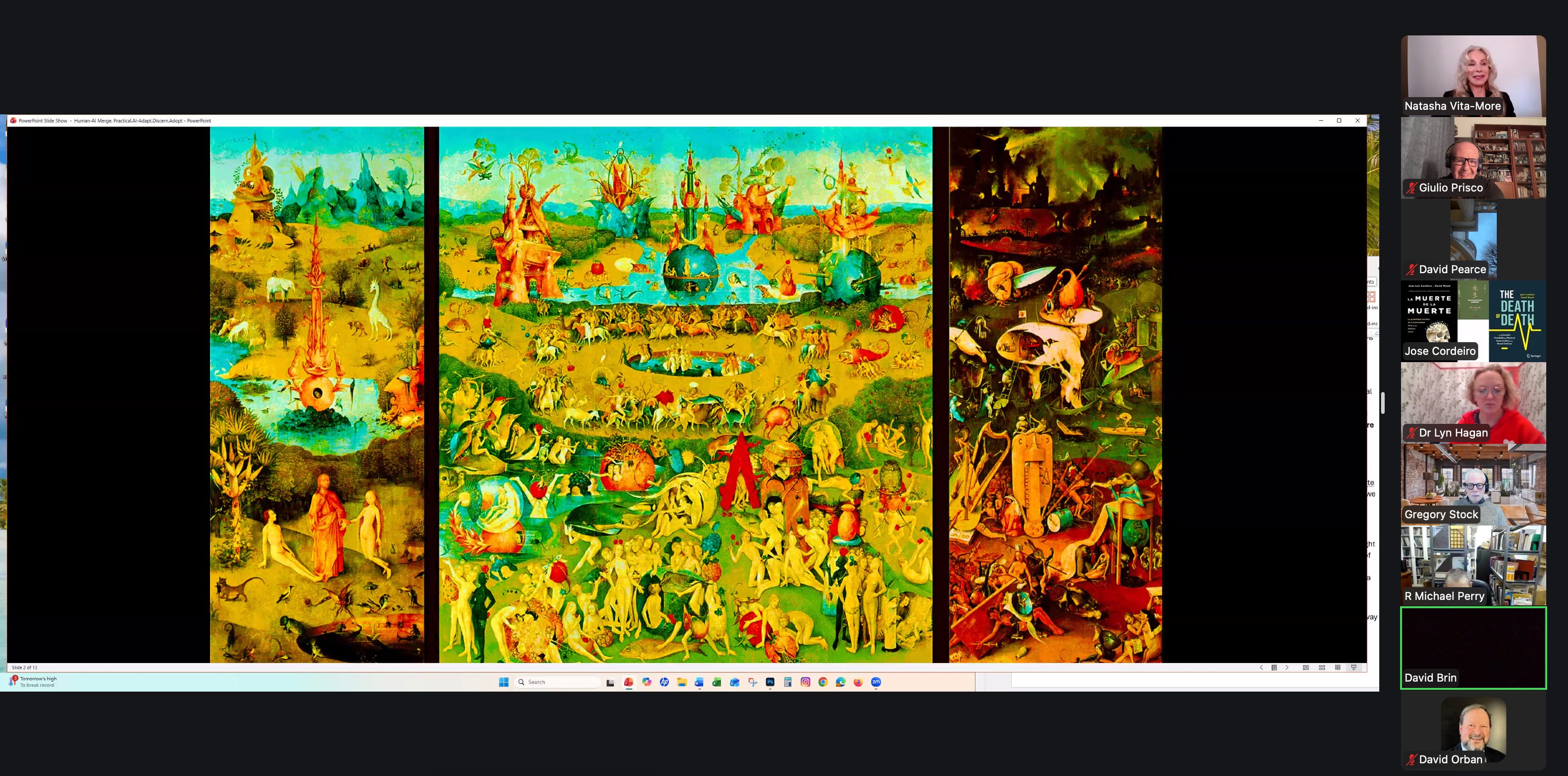
Natasha Vita-More discussed her approach to the human-AI merge, focusing on three core objectives: adapt, discern, and adopt. She emphasized the importance of education and hands-on experience with AI tools, rather than fear or avoidance, and the need for understanding and working with AI to ensure a beneficial future.
David Brin highlighted the dangers of feudal control over AI and proposed solutions based on Enlightenment principles, such as individuation and reciprocal accountability.
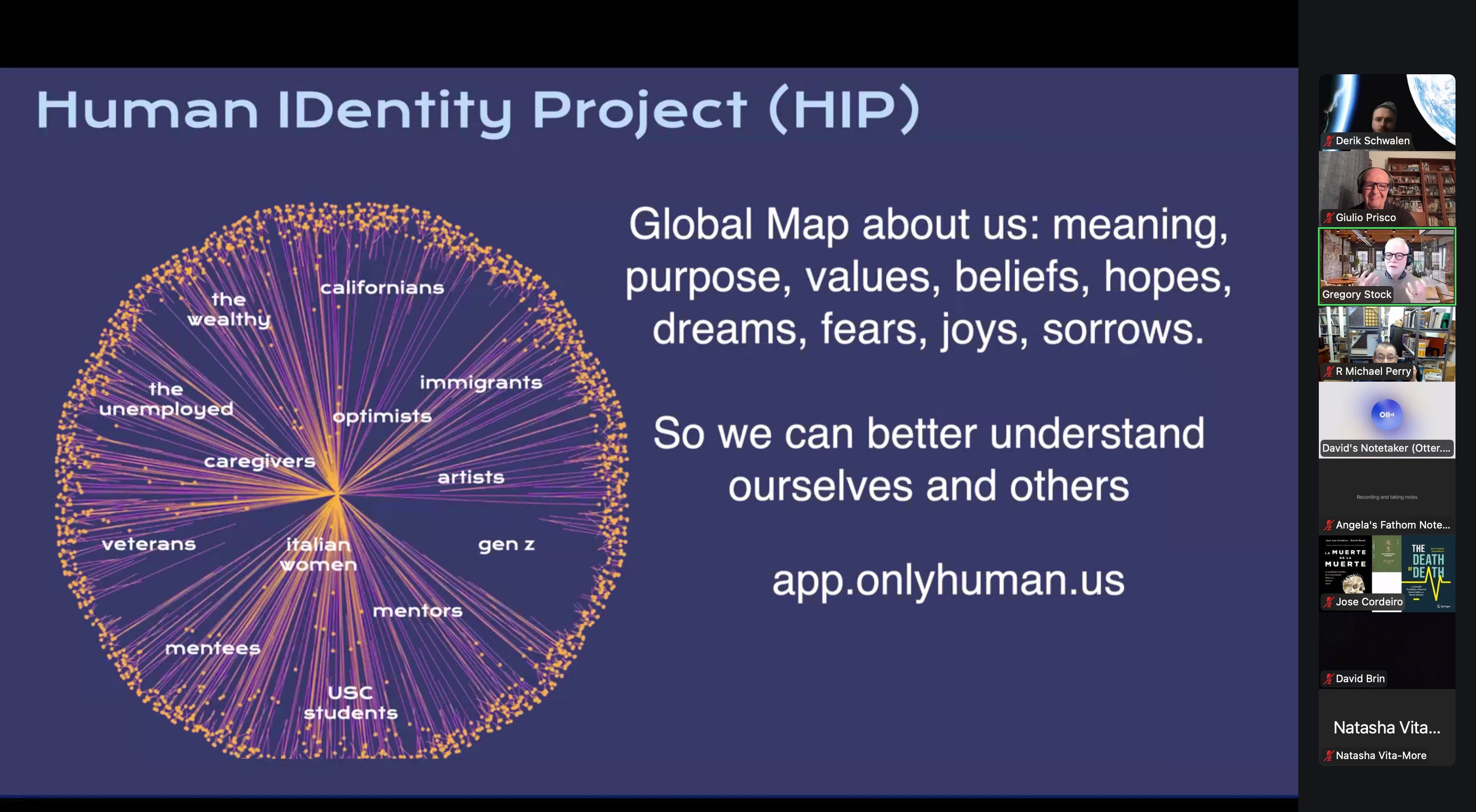
Gregory Stock focused on the rapid immersion of society into an AI-infused world and the need to address the profound changes this will bring to human identity.
The profound changes AI will bring to human life are discussed in Stock’s new book.
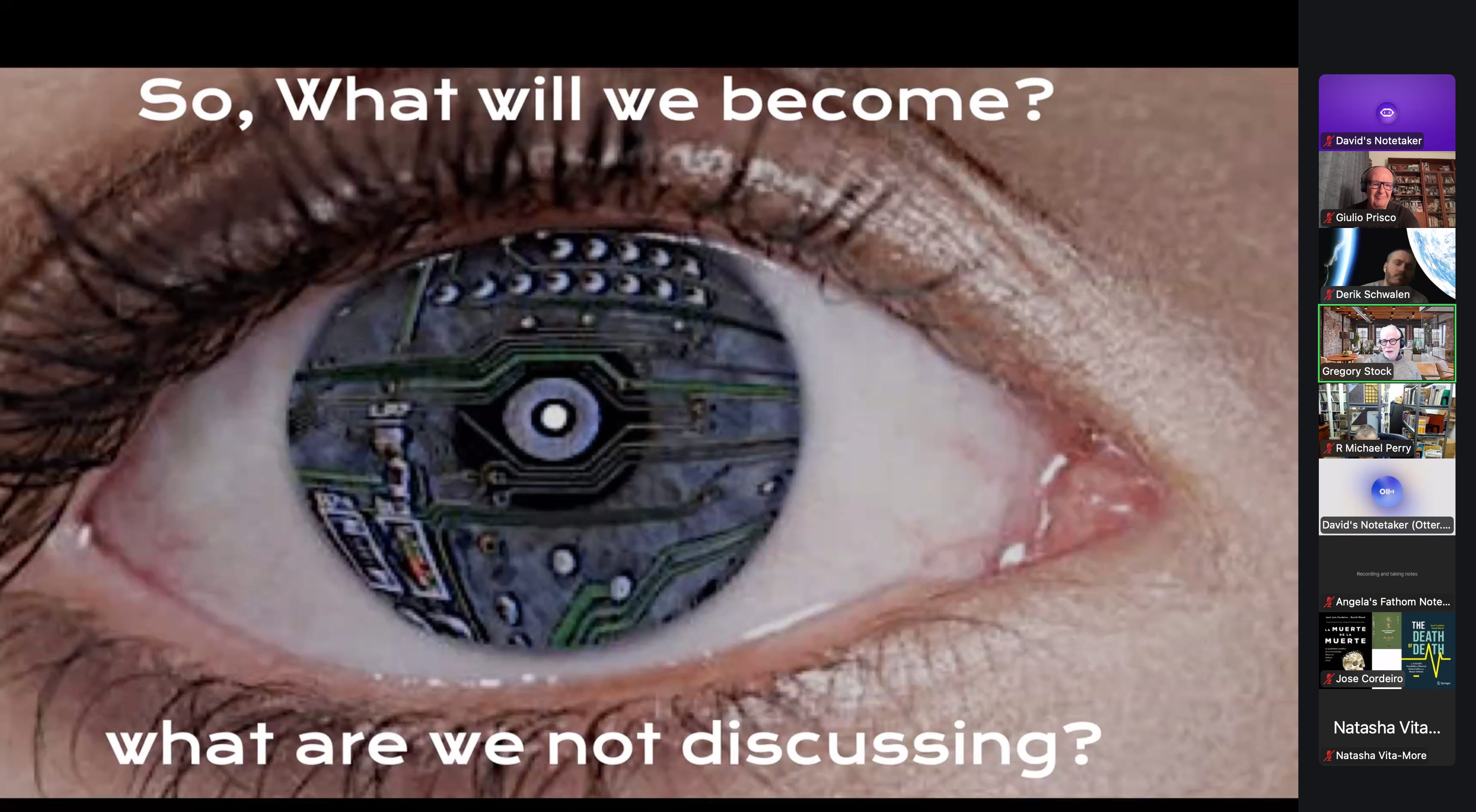
Stock emphasized five key areas: the expansion of the noosphere, global mind, and human interconnectivity; the shift towards abundance in technology and resources; increasing human dependence on AI; the development of deep emotional relationships between humans and AI; and the transformation of human attitudes towards death through the use of avatars and simulations.
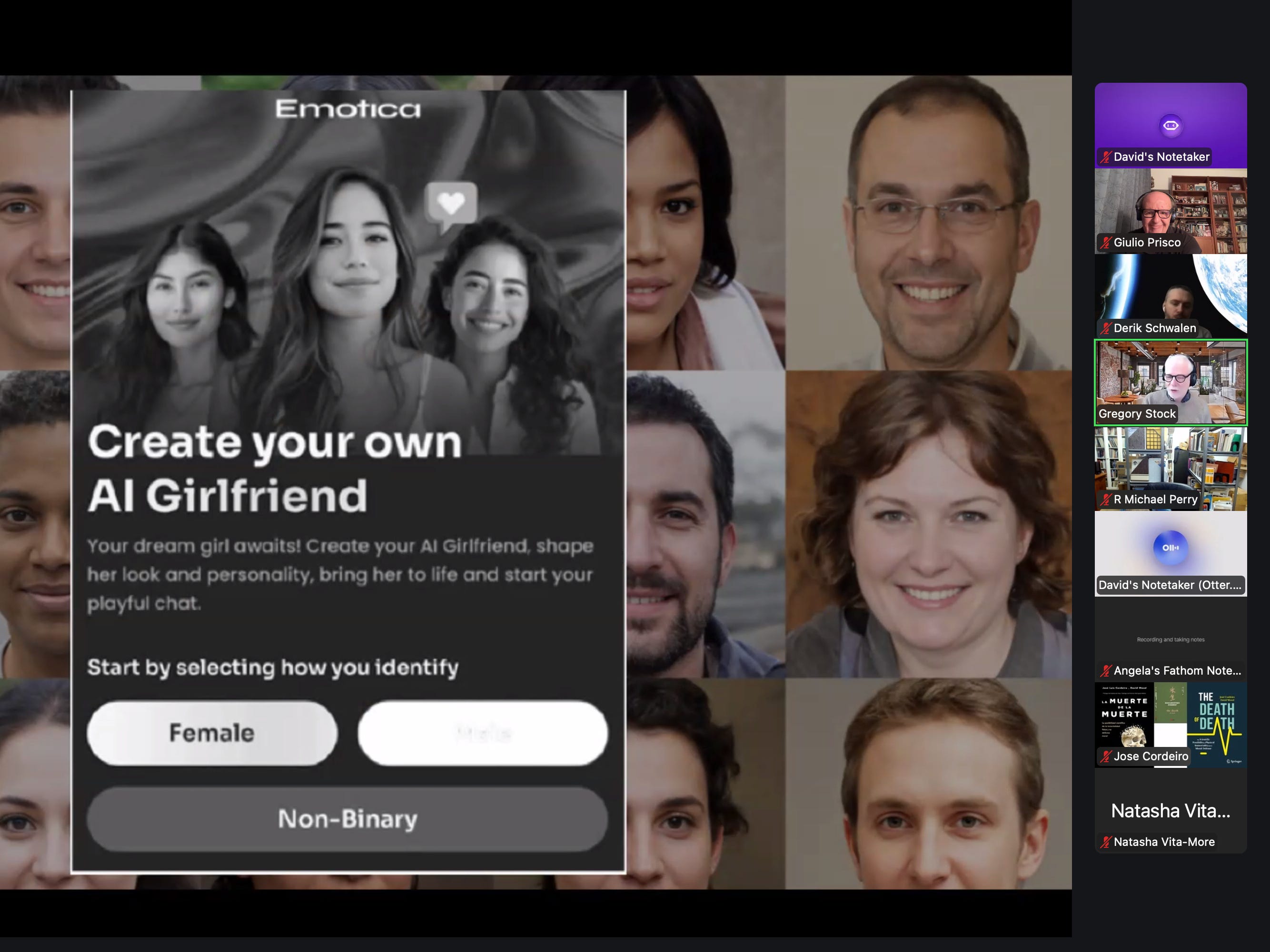
He argued that these changes will occur rapidly and are already underway, challenging current paradigms of human identity and society. The discussion highlighted the need for a global conversation about these transformations.
I’ll soon publish a much more detailed summary of this Terasem Colloquium. The detailed summary will also appear in the next issue of Terasem’s Journal of Personal Cyberconsciousness.


