

Greetings to all readers and subscribers, and special greetings to the paid subscribers!
Please scroll down for the main topic of this newsletter. But first:
The Terasem Colloquium on December 14, 2025, 10am to 1pm ET via Zoom, will explore recent developments in Artificial Intelligence (AI) and future prospects. The question is: Where is AI, and where is it going? Speakers: David Brin, David Orban, David Pearce, Gregory Stock, Natasha Vita-More. You are invited! Mark your calendar and stay tuned.
The Colloquium will continue and expand upon the discussion the previous Terasem Colloquium on July 20, dedicated to space expansion in the age of AI and in particular to the question: Should we still want to send human astronauts to colonize space? Or should we want to leave space expansion to AI? (see also below).
The Colloquium page has been updated with the agenda of the Colloquium and the Zoom access coordinates. I’m waiting for you! See you on December 14.
Some of my recent writings published in Mindplex:
AI-generated fun with vibe coding, math and physics (part 2)
I’ve been experimenting with vibe coding, math and physics with AI assistance from Grok, to test the performance of today’s AI on things that I know well enough.
This post continues my previous post “AI-generated fun with vibe coding, math and physics.”
I’ve always been interested in fractal geometry and the idea that it could have something to do with fundamental physics and the fabric of reality (see my 2024 book “Irrational mechanics”). Some time ago I stumbled upon a paper that suggested fractional calculus - an area of math I knew nothing about - could be the “natural” (so to speak) calculus appropriate to fractal phenomena. So I started studying fractional calculus. I decided to try and improve my understanding of fractional calculus and its intersections with fractal geometry by building examples and test cases. I relied on Grok for both vibe coding and exploring the underlying math and physics.
Contribute to Mindplex!
We are now opening Mindplex to new contributors. Successful applicants will join a community of content creators serving enthusiastic readers passionate for science, technology, the future, and the cosmos.
YES, you could contribute to Mindplex with articles, podcasts, videos, you name it. NO, you won’t be paid (yet). But YES, a compensation mechanism is planned for the future and will apply retroactively. And YES, your voice would be amplified and reach more AI and sci/tech enthusiasts interested in the future. Feel free to contact me if you want to contribute to Mindplex.
The Age of Disclosure explores aliens and government cover-ups
“The Age of Disclosure” (2025), directed by Dan Farah, is a provocative documentary on an alleged 80-year U.S. government cover-up of non-human intelligence.
Like everyone, I’ve seen “The Age of Disclosure.” Like everyone, I found it interesting. No, it didn’t make me a true believer, but it made me think. I still lean toward skepticism, but I’m open minded and interested. Here’s my review and commentary.
The elephant at Starbase
Starbase is a powerful symbol of our aspiration to become a multiplanetary and then interstellar civilization. But, likely, biological humans won’t be the ones to establish an interstellar civilization. AI will. This is the elephant at Starbase.
Let me elaborate upon the last article, which is also very relevant to the Terasem Colloquium.
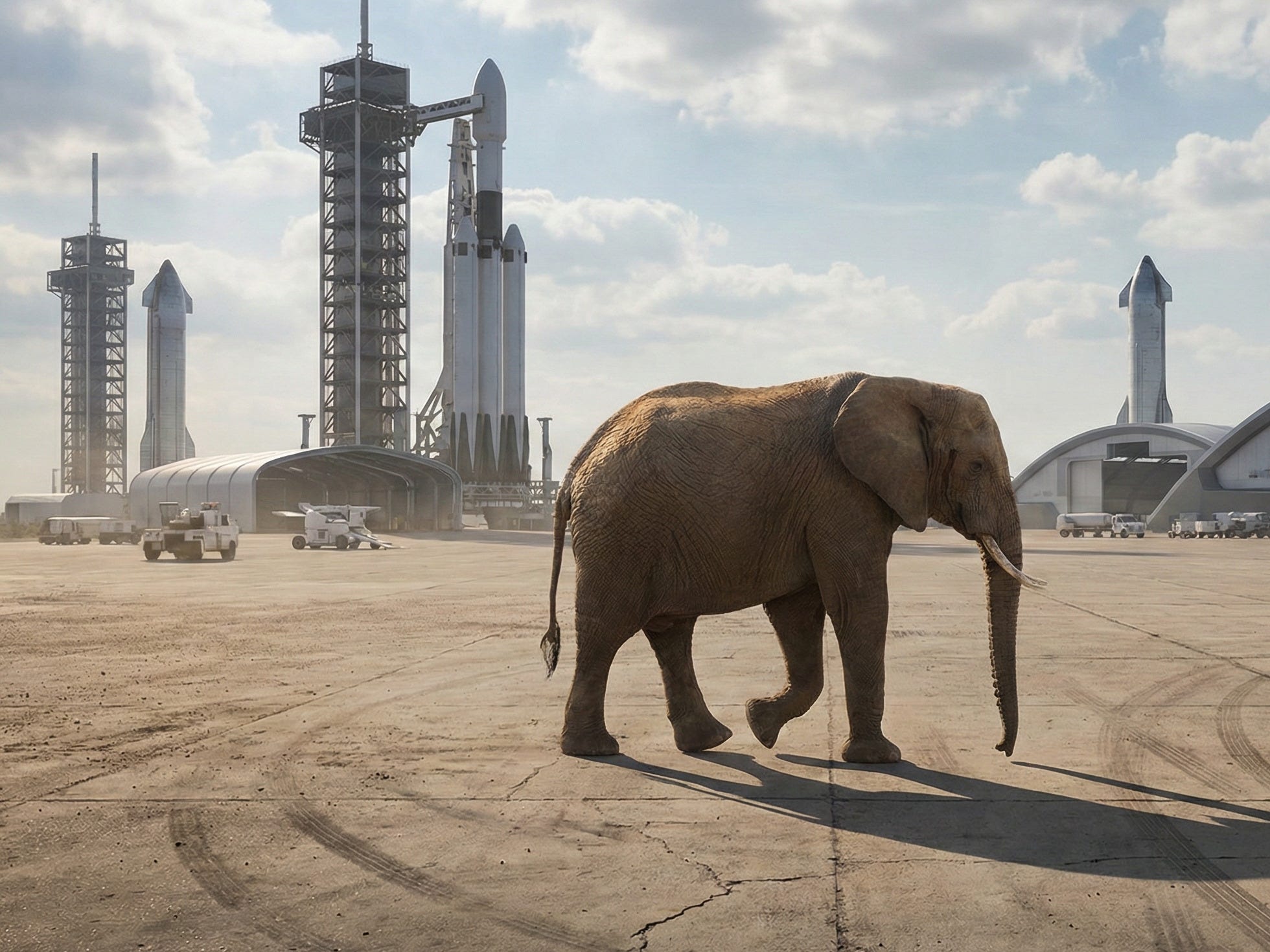
Excerpt:
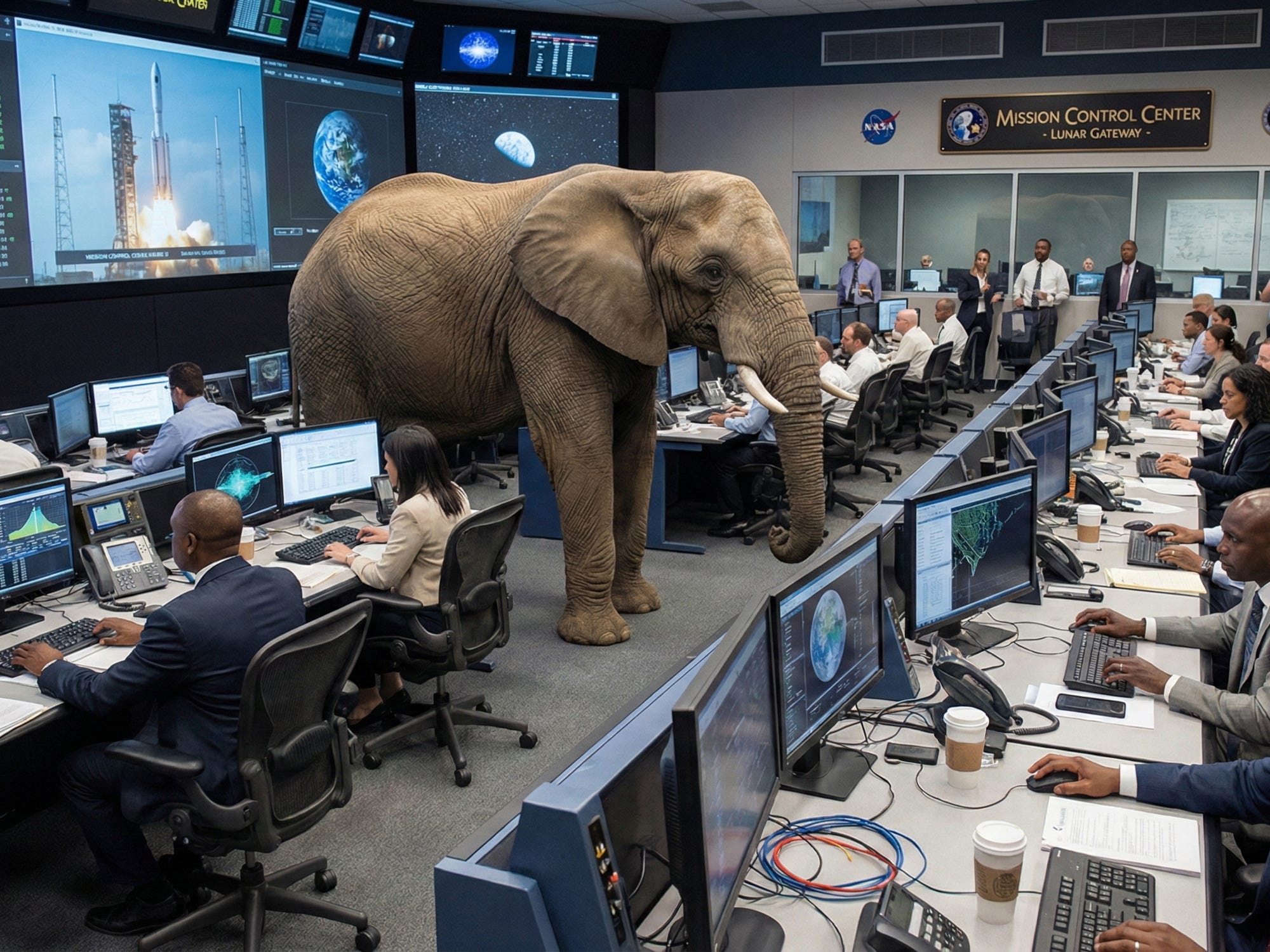
“…many space enthusiasts don’t see the elephant in the room. Or rather, in this case, the elephant at Starbase. Or rather, they don’t see the elephant at Starbase yet.
The expression ‘the elephant in the room’ refers to a significant, obvious issue or problem that is deliberately ignored or avoided in conversation, despite being apparent to everyone involved. The elephant at Starbase is the strong likelyhood that we, flesh-and-blood humans like you and me, won’t be the ones to establish an interstellar civilization.
Artificial intelligence (AI) will.
We can see the writing on the wall, and the writing on the wall says that AI and artificial superintelligence (ASI) will fill the galaxy and the universe with superintelligent consciousness…”
At the last Terasem Colloquium, Frank Tipler said that it will up to them, the superintelligent AI, to decide what role (if any) we biological humans could play in space expansion.
In my essay “Bats or bits to the stars?” in Terasem’s Journal of Personal Cyberconsciousness, Volume 13, Issue 1 (2025), I said:
“Human-level and then superintelligent conscious AI will take over in the long run and spread into the universe. We may merge with the AIs to some degree, but the perception of a difference between “us” and “them” will gradually fade away: all will be “us.”
For the rest of this century, we should pursue both AI technology and traditional space expansion with both biological and AI colonists, establishing a multi-planetary civilization in the solar system.
In the meantime, we must learn to see AI machines as persons. Future generations will find this intuitively and emotionally obvious, but presently we must train ourselves to accept our mind children as ‘us.’”
I’m learning to see these machines of loving grace as part of future humanity, just like our organic grandchildren, and this is kind of liberating.
The words of Henry Miller come to mind: “To live out one’s desires and, in so doing, subtly alter their nature, is the aim of every individual who aspires to evolve.” To live out our desire to reach the stars, we’ve developing technologies that are converging to superintelligent machines of loving grace, which will take over and realize our desire. But I think this doesn’t alter the essential nature of our desire to reach the stars, because these machines will be us.
I agree. I don't think a biological Human will ever visit Alpha Centauri even though it's only 4 light years away, but an AI could. The best way to do it would be to send a Von Newman probe there, since it has such a small mass it should be possible to accelerate it to 10% of the speed of light without too much trouble. When it arrives the probe would build a large data farm and insert the neural connection weights of the AI into it. And now the AI is at Alpha Centauri. Using the same method the AI could visit the Andromeda Galaxy, it would take 20 million years instead of 40 but subjectively to the AI it would seem to be instantaneous transportation.
John K Clark