
Merry Christmas and happy 2026!
I have great expectations for 2026, especially for space and AI.

I wish a merry Christmas and a very happy 2026 to all readers!

The Terasem Colloquium on December 14, 2025, explored recent developments in Artificial Intelligence (AI) and future prospects. The speakers - David Orban, David Pearce, Natasha Vita-More, David Brin, and Gregory Stock, explored the question: Where is AI, and where is it going? Here’s the full video recording of the Colloquium. See also Terasem’s Journal of Personal Cyberconsciousness, Volume 13, Issue 2 - 2025.
Some of my recent writings published in Mindplex:
Generation AI and the common future of biology and technology
A review of “Generation AI and the Transformation of Human Being,” by Gregory Stock, with commentary.
This is a great book; a page-turner packed with thoughtful and insightful observations on the present and future of AI and inspired by a refreshingly optimistic view of human and AI evolution. Generation AI is a much better conceptual guide to our AI-enabled future than the more cautious, precautionary, or even scary treatments of AI that have become fashionable.
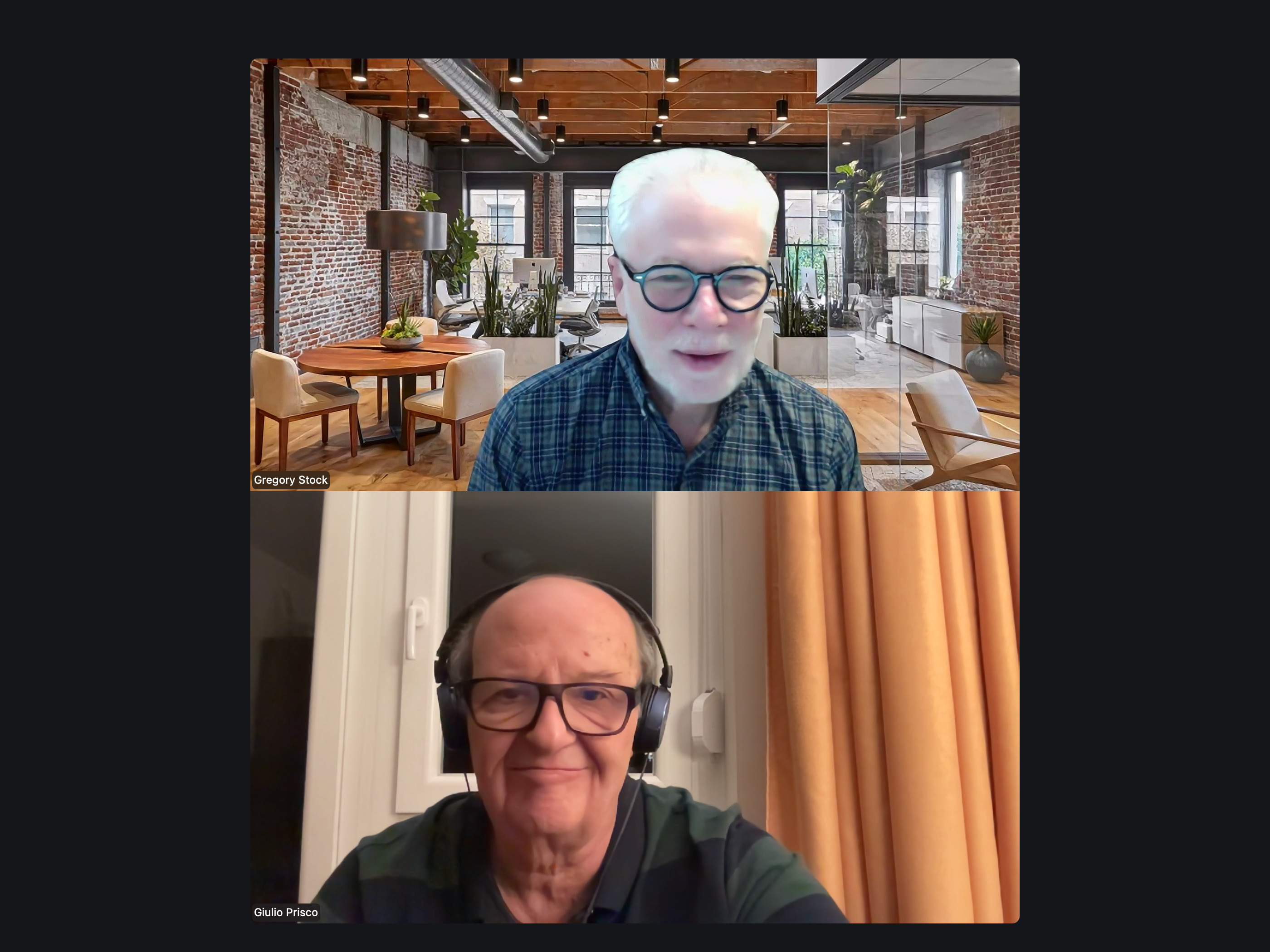
Greg gave a great talk about the book at the Terasem Colloquium.
ELI5: Hyperon for complete idiots (part 1)
I’m trying to grok the AI framework Hyperon. This series of articles chronicles my learning journey. An absolute beginner (yours truly) tries to grok the AI framework Hyperon, developed by Ben Goertzel & friends. First part of many.
Ben Goertzel and others are persuaded that today’s “feeling” (I love this terminology) AI technology based on the transformer neural networks that power ChatGPT & friends is unable to scale up to AGI and ASI. Ben thinks Hyperon might be scalable.
I’m kind of sitting on the fence about this: today’s feeling AI tools have produced spectacular and entirely unexpected results, and this must mean something. So I understand those who see the glass half-full. But half-full and half-empty is the same thing, and I also understand those who see the glass half-empty. However, of course there’s a big difference between 5 percent full and 95 percent full.
In 2026 I’ll try to understand these things better, and dive deeper into Hyperon. I’ll find extra motivation in Ben’s paper “Psi via Wu-Wei Quantum Geodesics: A Theory and Experimental Program” (2025). The paper is not about Hyperon but about “a novel theoretical framework for understanding psi phenomena through the lens of quantum evolution” (!!!). Ben suggests that Hyperon provides “an ideal testbed” for this framework. I’m hooked!
I have great expectations for 2026!
It seems likely that AI technology will continue to make spectacular advances. Perhaps, just perhaps, in 2026 we’ll see solid progress toward human-level artificial general intelligence and human-like consciousness.
Moving to space, NASA is preparing for the Artemis II mission, which will take four astronauts around the Moon. In November NASA said: “Artemis II is targeted to launch no later than April 2026, with potential opportunities as soon as February.” So we could soon see people orbiting the Moon once again, like in Apollo 8.
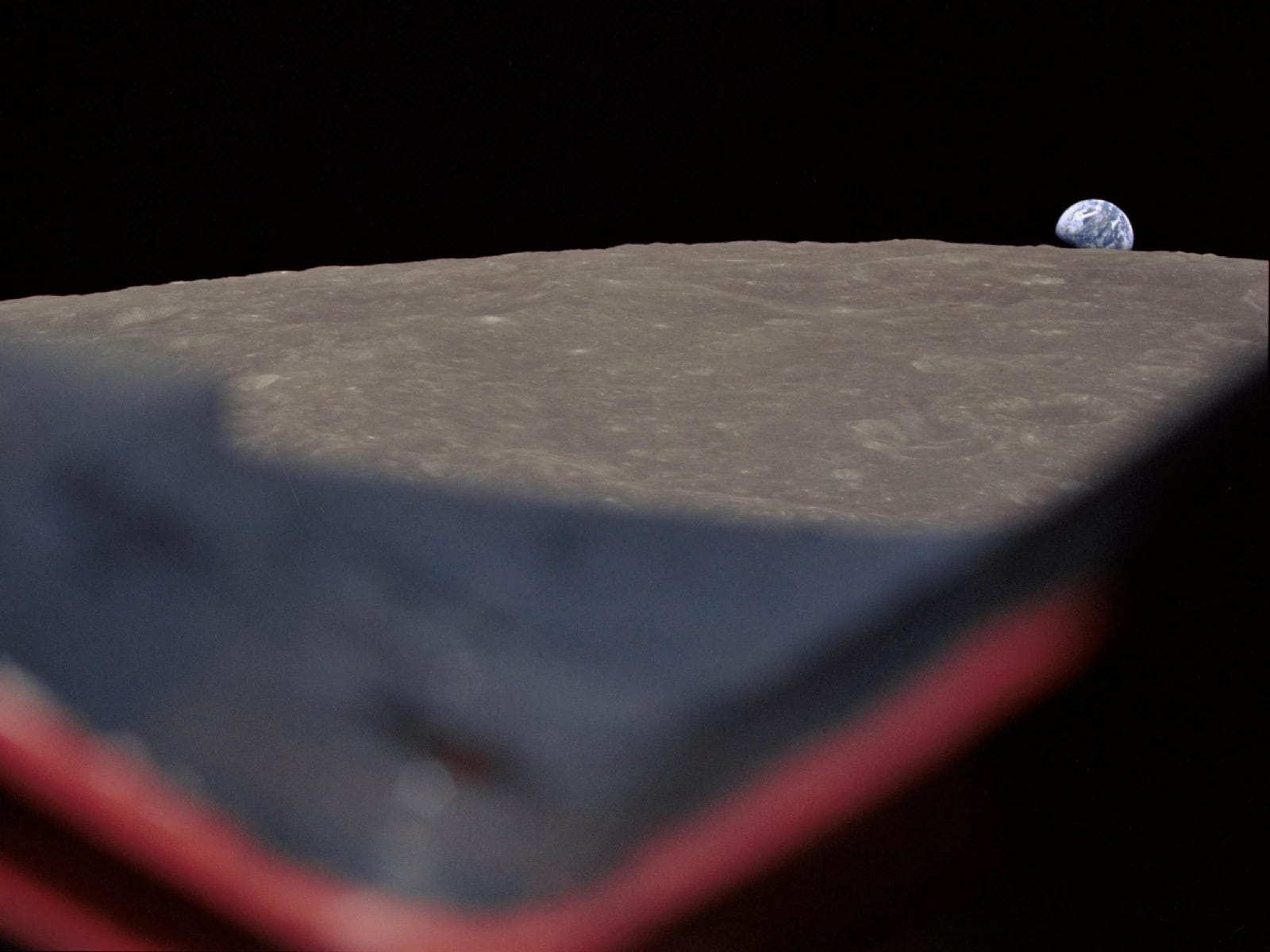
Apollo 8 was our magic Christmas mission around the Moon in 1968. Probably due to the Christmas atmosphere, my young self (11) found Apollo 8 even more magic than Apollo 11 a few months later. Now I’m happy that young kids all over the world will be able to watch people around the Moon and enjoy the magic again, this time with much better visuals.
And while the Apollo program was lamentably aborted for the reasons we all know, the new phase of our adventures on the Moon promises to be more sustainable. We are going back to the Moon, and this time we are going back to stay.
Good news: Jared Isaacman is the new NASA administrator and will lead NASA through the beginnings of the next phase of human space expansion. It has taken long, but now NASA has the best leader. Congratulations Rook! More good news: Trump signed an Executive Order that “calls for Americans’ return to the Moon by 2028, and the establishment of initial elements of a permanent lunar outpost by 2030.”
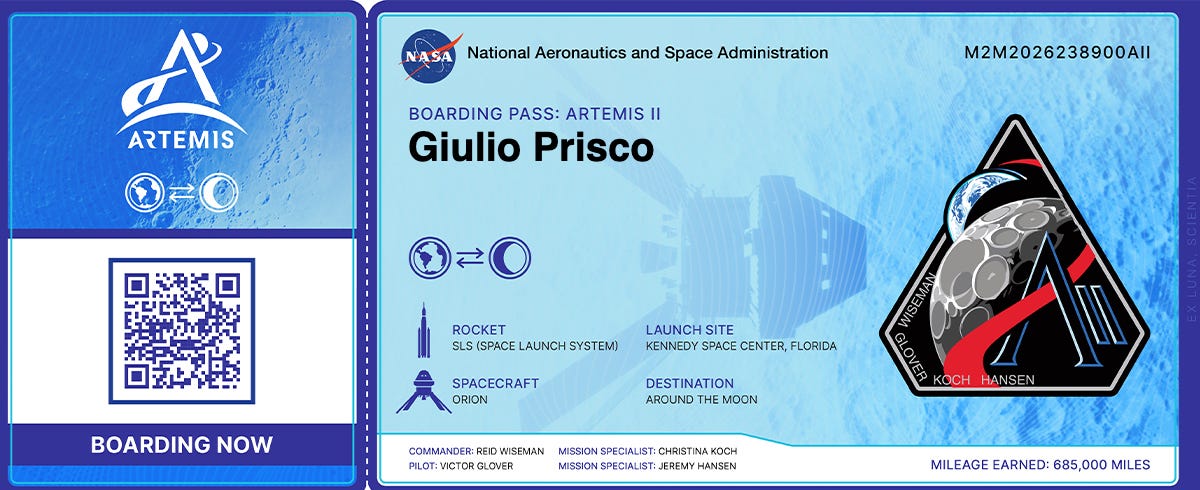
I guess I’ll be glued to the TV in my living room (this time a much larger, high-resolution TV connected to the internet) for Artemis II, from launch to splashdown.
But there’ll be an elephant in my living room. I’ve recently written about the elephant at Starbase, the elephant in the space mission control room, and now the elephant is coming to my living room.
The elephant is the very plausible possibility that we, flesh-and-blood humans like you and me, won’t be the ones to establish an interstellar civilization. Artificial intelligence (AI) will. AI, not us. I can see the writing on the wall, and the writing on the wall says that AI and artificial superintelligence (ASI) - not organic humans1.0 - will fill the galaxy and the universe with superintelligent consciousness. Hopefully we organic humans1.0 will be able to participate as mindfiles uploaded to AI systems and robotic bodies.
I’m slowly making peace with this, and so should you. How? We must learn to see AI machines as persons. Future generations will find this intuitively and emotionally obvious, but presently we must train ourselves to accept our mind children as “us.”
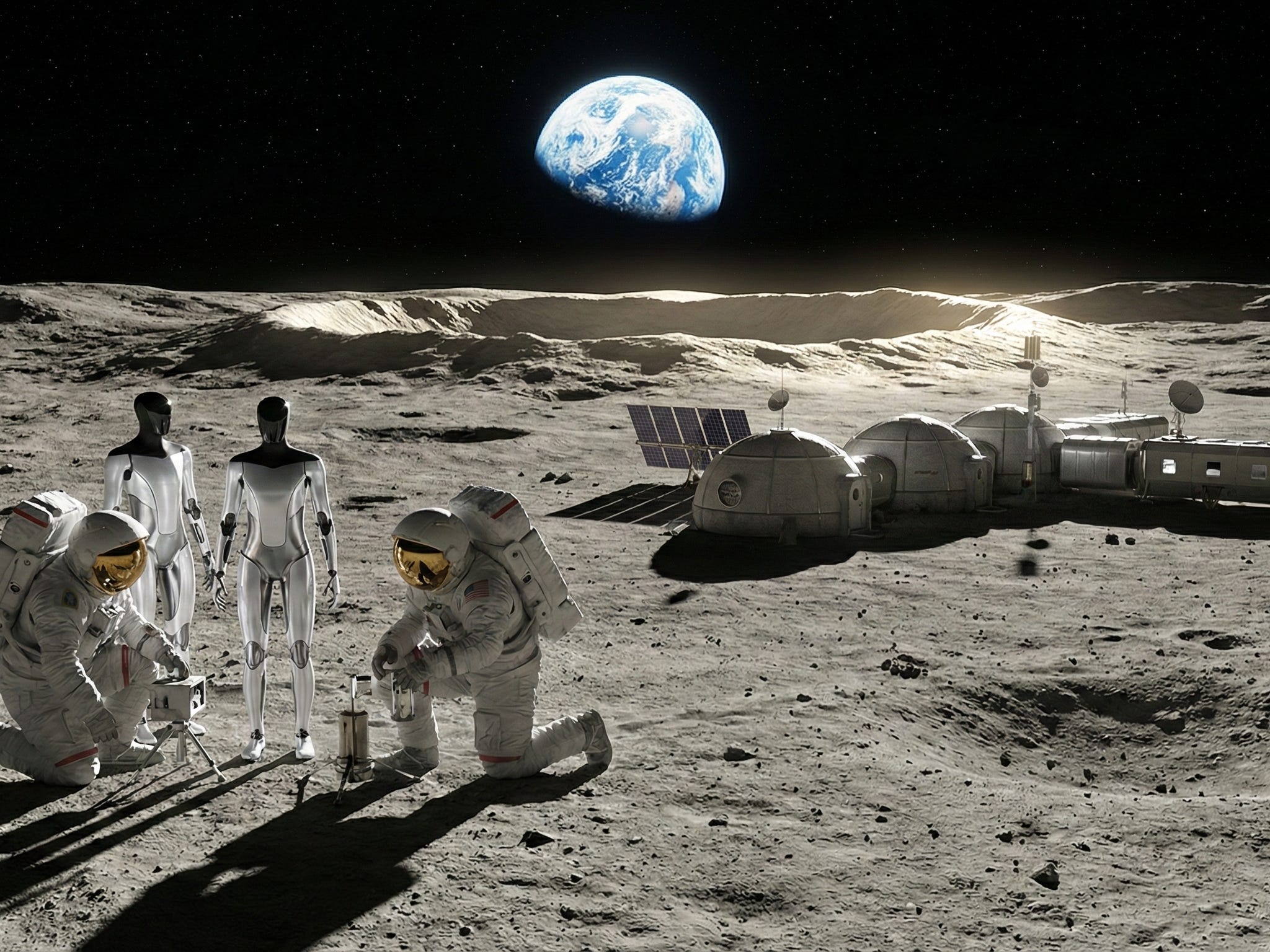
The Moon can be our training ground. In ten years or so, we could have a little but permanently crewed research station on the Moon, probably near the lunar south pole. Besides the astronauts, there’ll be AIstronauts - intelligent and then more intelligent and then even more intelligent AIs in data centers and humanoid robots.
So imagine looking at the lunar south pole and knowing that there are intelligent and arguably conscious AI-powered robots there, building infrastructure and doing important scientific research. Wouldn’t you think of the AIstronauts as just astronauts? Wouldn’t you see them as your representatives and friends in space? I think I would, and I’m looking forward to seeing all this.
The next Terasem Colloquium in July and the next issue of Terasem’s Journal of Personal Cyberconsciousness, also to be published in July, will be dedicated to the beginnings of space expansion. Hopefully in July Artemis II will have been a success and the preparation for the permanent return to the Moon and the beginnings of humanity’s space expansion will be in full swing.
But the genie is out of the bottle and there's no putting it back. The idea that our AI mind children will lead the march of humanity toward the stars, hopefully with a place for human mindfiles, will become just common sense. So of course the role of AI is still part of the theme.