

The first Terasem Colloquium of 2026 will take place on Monday, July 20, the anniversary of the first human landing on the Moon. The Colloqium will take place via Zoom, from 10am ET to 1pm ET.
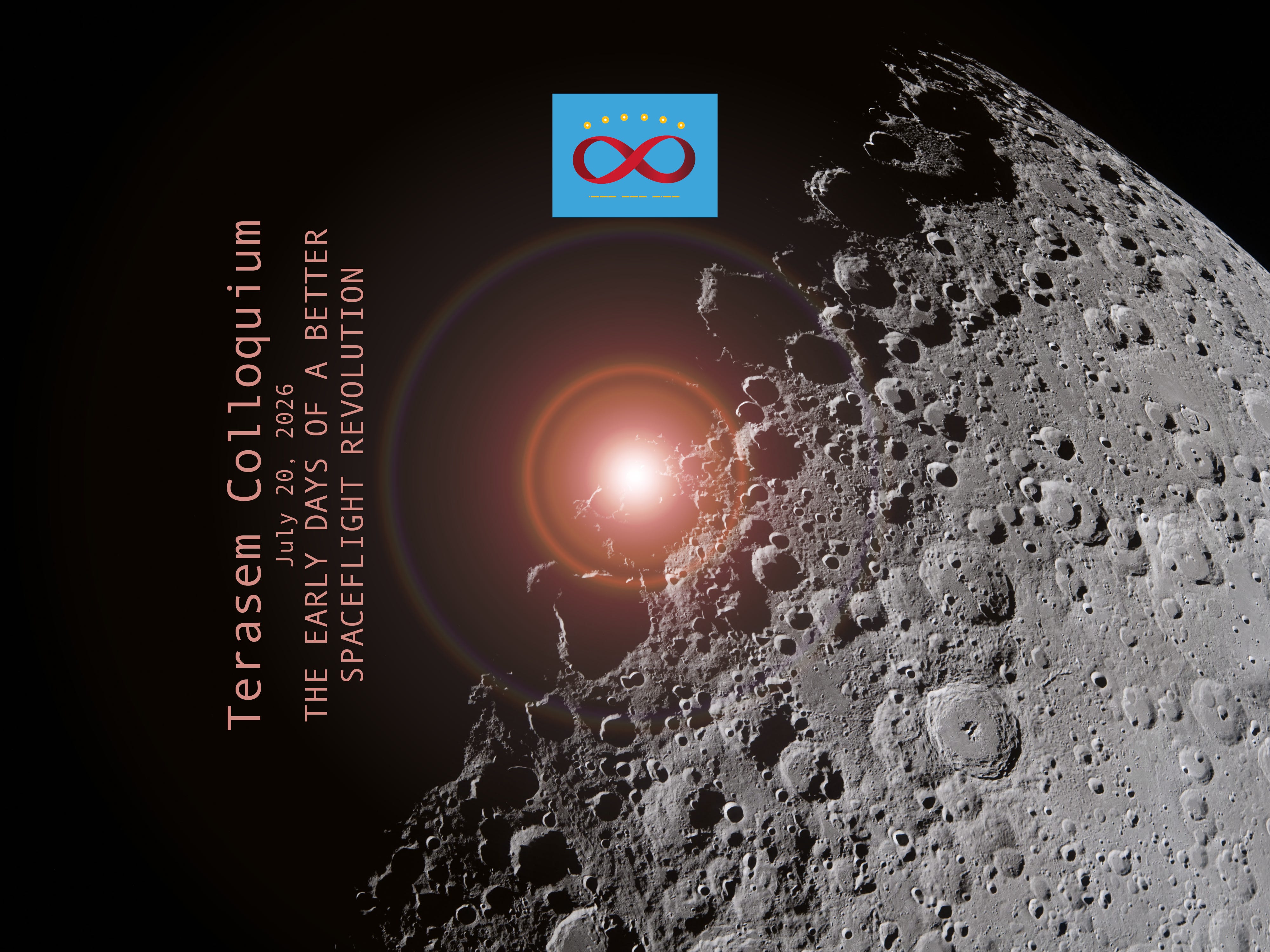
The theme of the Colloquium is: The early days of a better Spaceflight Revolution.
“As William Sims Bainbridge pointed out in his 1976 book, The Spaceflight Revolution: A Sociological Study,” said Arthur Clarke, “space travel is a technological mutation that should not really have arrived until the 21st century.”
Bainbridge’s book, written 50 years ago, is worth reading again. “Somewhere soon after the turn of the century there is the real possibility of a Second Spaceflight Revolution,” said Bainbridge in the last chapter. Bainbridge will speak at the Colloquium about a new, and better, Spaceflight Revolution.
Today, many space enthusiasts are celebrating the Artemis II mission around the Moon, and the recently announced NASA plans, as possible beginnings of a better Spaceflight Revolution. But it can be argued that the Revolution started two decades ago with the NewSpace movement - a pioneer of which, Rick Tumlinson, will also speak at the Colloquium.
See here for a list of previous Terasem Colloquia, with full video recordings.
A new issue of Terasem’s Journal of Personal Cyberconsciousness will be published on July 20. If you have an article to submit, please send it to me or to terasemjournals@gmail.com.
Agenda
10am ET: Introduction by Giulio Prisco
10:05 am ET: William Sims Bainbridge
10:30 am ET: Rebecca Lowe
10:55 am ET: Namrata Goswami
11:20 am ET: Angela Meyers
11:45 am ET: Rick Tumlinson
12:10 pm ET: Robert Geraci
12:35 pm ET: Christopher Cokinos
You are invited!
Zoom access coordinates
Terasem Colloquium, July 20, 2026, 10am ET - 1pm ET
(7am - 10am PT, 4pm - 7pm CET).
Meeting ID: 880 1947 6315
Passcode: 476537
CLICK HERE to access the Zoom meeting
Speakers
William Sims Bainbridge
William Sims Bainbridge served for 31 years as a program director at the National Science Foundation, first in Sociology, and then Human-Centered Computing. At NSF he was very active in several innovative programs, including the Digital Library Initiative, Ethics of Nanotechnology, and Converging Technologies. He earned his Harvard doctorate through research on the social history of spaceflight (see his book “The Spaceflight Revolution: A Sociological Study” (1976). Other areas covered by his hundreds of publications are the sociology of religious innovation, online virtual worlds, and computer-based emulation of human personality.
Christopher Cokinos
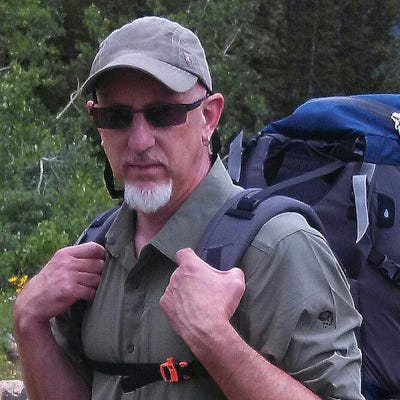
Christopher Cokinos is the author of the critically praised book “Still as Bright: An Illuminating History of the Moon from Antiquity to Tomorrow” (Pegasus, 2024), a Toronto Globe & Mail Best Book for that year. He is co-editor of “Moon Bound”, a miniature book being sent to the Moon by the Moon Gallery Foundation, as part of a payload on the Astrolab FLIP rover later this year. In 2024, he organized a six-day all-artist lunar analog mission at Biosphere 2. His work on the Moon has been published in such venues as Esquire, the Los Angeles Times, Orion and Astronomy. He was co-editor of Beyond Earth's Edge: The Poetry of Spaceflight and is at work on a book about the fate of the Sun, the solar system and life as we know it. He lives in northern Utah and is dedicated lunar visual observer.
Title of his talk: To Be In Thought A Lunar Being: How Do We Apprentice Ourselves to the Moon?
Abstract: What does the early future of renewed human presence look like on the Moon? Reviewing the new trajectory of Artemis, as well as the Chinese program, science writer Christopher Cokinos will project possible paths, from energetic commercial activities to a science-only presence more like Antarctica. He’ll argue that regardless of such paths and in addition to any terrestrial oversight (still based in the Outer Space Treaty), the astronauts themselves will be the ultimate custodians how we behave toward each other and toward the visual integrity of lunar terrain. Drawing on the 19th century selenographer James Nasmyth’s potent phrase, “to be in thought a lunar being,” Cokinos contends that appreciation for the Moon’s many cultural and scientific dimensions as well as a love of its sublime landscapes is how we can become worthy of the choice we’ve made to make a home there. Homekeeping, not frontierism, is crucial. Facts and metaphors matter - even poetry. The Artemis II astronauts gave us a glimpse of what that looks like and why it inspires.
Robert Geraci
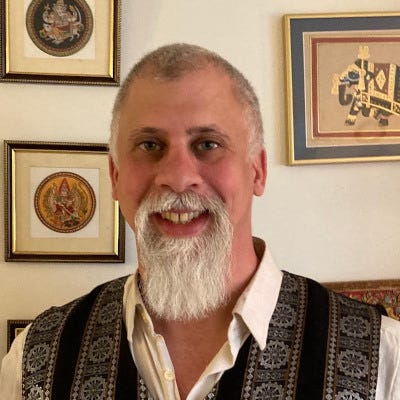
Robert Geraci is Knight Distinguished Chair for the Study of Religion and Culture at Knox College. He studies religion, science, & technology with particular reference to digital technologies using methods drawn from around the intellectual spectrum and around the world. He has lived in India, collaborates in Korea, and studies the world of science and technology with a lens grounded in religious thought and practice. His projects range from handloom weaving to laboratory science, but most of his research has to do with artificial intelligence. He has been reflecting on the religious narratives told by AI researchers for more than two decades.
He’s the author of Apocalyptic AI: Visions of Heaven in Robotics, Artificial Intelligence, and Robotics (Oxford University Press, 2010), Virtually Sacred: Myth and Meaning in World of Warcraft and Second Life (Oxford University Press, 2014), Temples of Modernity: Nationalism, Hinduism, and Transhumanism in South Indian Science (Lexington, 2018), Futures of Artificial Intelligence: Perspectives from India and the U.S. (Oxford University Press, 2022). His last book is “Futureproofing Humanity: Existential Risk and the Technomyths of Human Engineering, Artificial Intelligence, and Our Future among the Stars” (2026).
Namrata Goswami

Namrata Goswami is a professor of Space Security with the Schriever and West Space Scholars Program at the School of Advanced International Studies (SAIS), Johns Hopkins University. She also teaches space policy and international relations at the Thunderbird School of Global Management, Arizona State University, and is a faculty affiliate with Arizona State University's Interplanetary Initiative. She co-authored the book “Scramble for the Skies: The Great Power Competition to Control the Resources of Outer Space,” published by Lexington Press in 2020.
Rebecca Lowe

Rebecca Lowe is Philosophy Senior Research Fellow and Director of Emerging Scholars at the Mercatus Center at George Mason University. A political philosopher, her primary research interests include rights, freedom, and equality.
Lowe is the former director of FREER, a UK think tank advancing economically and socially liberal ideas, and has also held positions at other UK research organizations, including the Institute of Economic Affairs and Policy Exchange. Until recently, she was Consulting Space Philosopher at a strategic space advisory firm, and a Senior Reader at the Canterbury Institute in Oxford.
Angela Meyers

Angela Meyers is a pioneering scholar in polymathy, recognized for authoring the first doctoral dissertation on the subject. She has played a vital role in establishing Polymathy Studies as a recognized field, supervising subsequent research and inspiring countless individuals through her YouTube channel and online community, Polymaths Place. With a career that spans academia, government leadership, real estate, and criminal justice reform, Dr Meyers exemplifies the multi-faceted nature of polymathy. Her work empowers others to embrace diverse skills and interests, advocating for lifelong, life-wide learning as a path to personal and societal transformation.
Rick Tumlinson
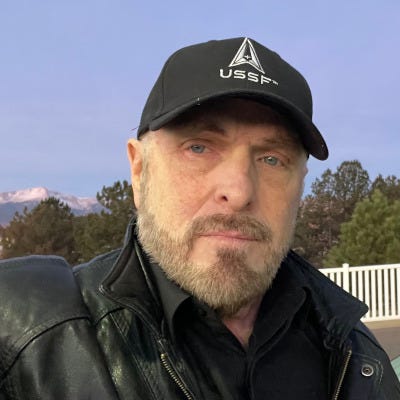
A leader in the space community on a quest to transform the future - by helping humanity literally rise above its past - Rick Tumlinson helped create the New Space Revolution exemplified by Elon Musk and Jeff Bezos. He led the takeover of the Russian Mir space station, signed the first space private citizen to buy a ticket to the space station, and helped develop the policies allowing the private sector to begin leading the U.S. space agenda. His venture capital firm SpaceFund has invested in over 20 space startups, even as he is is fighting for an inclusive and environmentally responsible space industry. Blending pragmatic business and a serious track record of accomplishment with a soaring yet achievable vision of our future, his work speaks for itself, and when he speaks, the space world listens. His EarthLight Foundation hosts the Space Cowboy Ball and New Worlds Faire. His latest book is “Why Space?: The Purpose of People” (2025).