

Greetings to all readers and subscribers, and special greetings to the paid subscribers!
Please scroll down for the main topic of this newsletter. But first:
The Italian translation of my first book “Tales of the Turing Church” has been published by Moira in paperback and Kindle editions as “Turing Church: parabole e iperboli.”
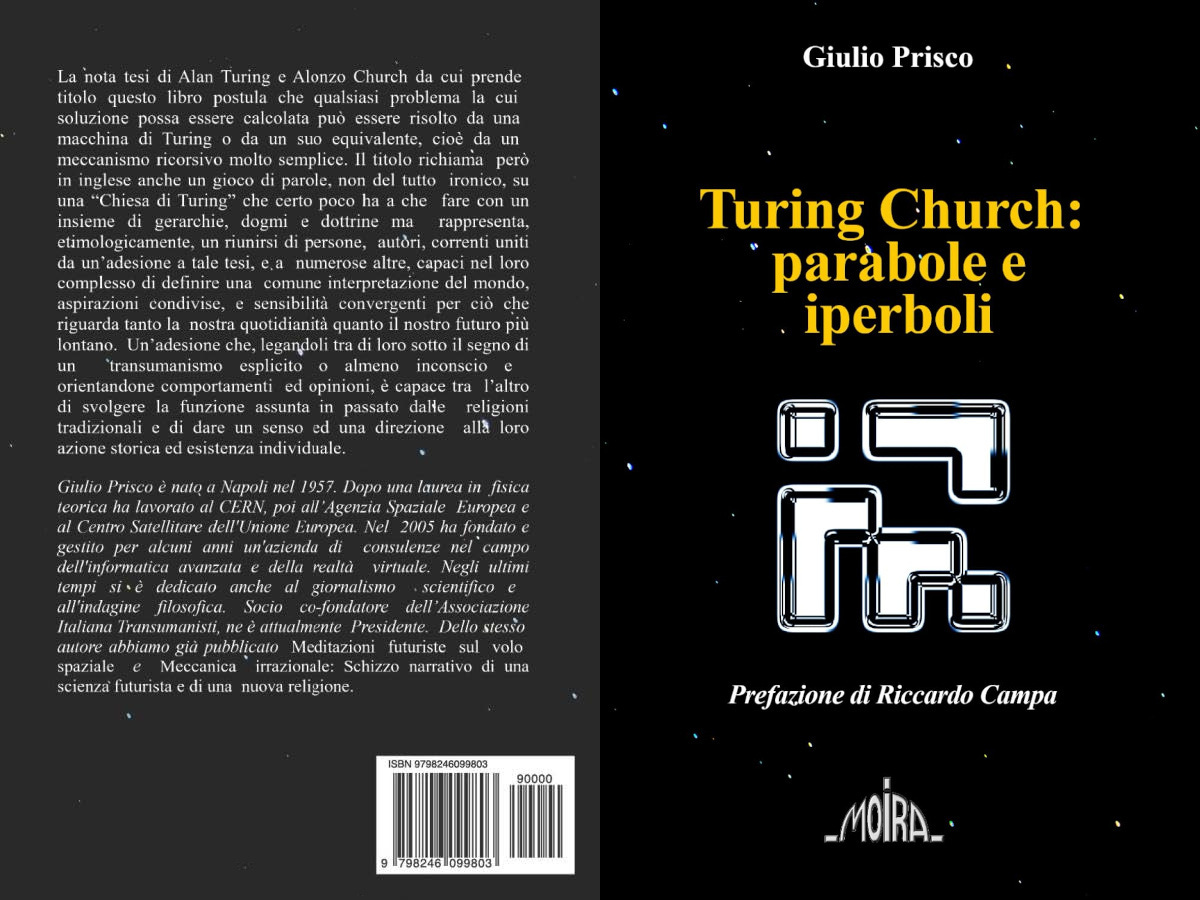
Now all my books are available in Italian translation.
Here’s the second episode of my conversation with Gregory Stock, the author of the excellent book “Generation AI” (see my book review published in Mindplex). A very interesting conversation! The conversation is published as a Mindplex podcast episode titled “Technology is Biology, with Gregory Stock.”
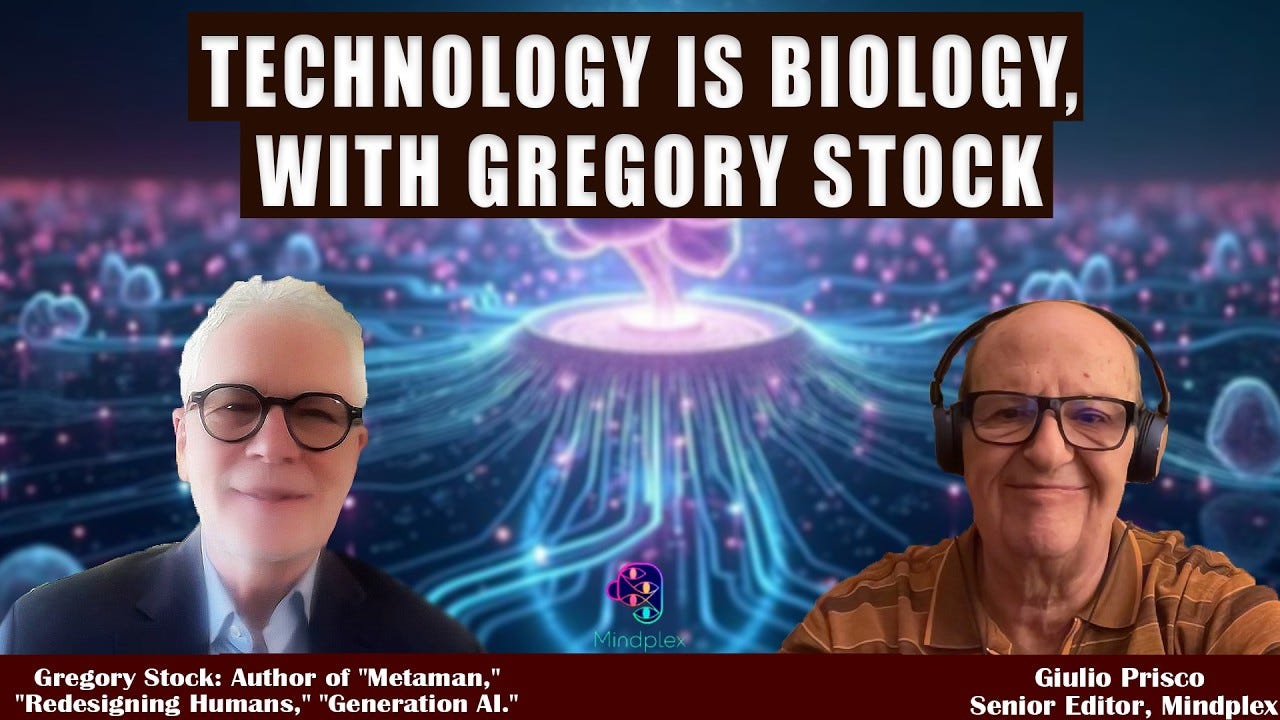
YouTube: Gregory Stock (author of Generation AI) and Giulio Prisco (author of Futurist Spaceflight Meditations) move beyond the typical fears of AI replacing humans. Instead, they explore the deep cosmic and spiritual meaning of technology. Is Technology Biology? If we are part of nature, and we create technology, does that make technology a natural, biological process?
Some of my recent writings published in Mindplex:
An extropian festival: Max More, Anders Sandberg, Natasha Vita-More, and Eliezer Yudkowsky debate AI futures
Legendary futurists Max More, Anders Sandberg, Natasha Vita-More, and Eliezer Yudkowsky recently met online to debate AI and possible AI futures.
In the next few days I’ll chat with Max and Natasha for new Mindplex podcast episodes.
Turing’s Ghost in the Machine: The Case for a Realized AGI
Seventy-five years after Turing’s "Imitation Game," a new Nature commentary claims the quest for general intelligence is officially over.
AI-generated fun with vibe coding, math and physics (part 3)
This post continues my previous posts "AI-generated fun with vibe coding, math and physics" and illustrates an intuitive geometric interpretation of fractional calculus related to fractal geometry.
Finding such an interpretation was my goal, so this post concludes the series. I’ll move to other things, but I must confess that in a spur of the moment inspiration I’ve spent time to develop a Bitcoin trading simulator and assistant based on stochastic fractional Brownian motion (fBm) math (it is a proof of concept, I don’t plan to use it - trading is not my thing).
SpaceX shifts focus from Mars to Moon
Elon Musk announces priority on lunar city for faster human expansion in space.
Bostrom on AI development: Swift to Harbor, Slow to Berth
Nick Bostrom's mathematical case for cautious acceleration toward superintelligence.
The Artemis II saga: SLS setbacks and the push for alternatives
I look forward to celebrating a successful Artemis II mission in April and praise NASA for taking us back to the Moon, before a new beginning.
Major changes in NASA’s Artemis program
NASA announced a major overhaul of the Artemis program aimed at accelerating America's return to the Moon.
I’m always looking for inspiring space pictures.
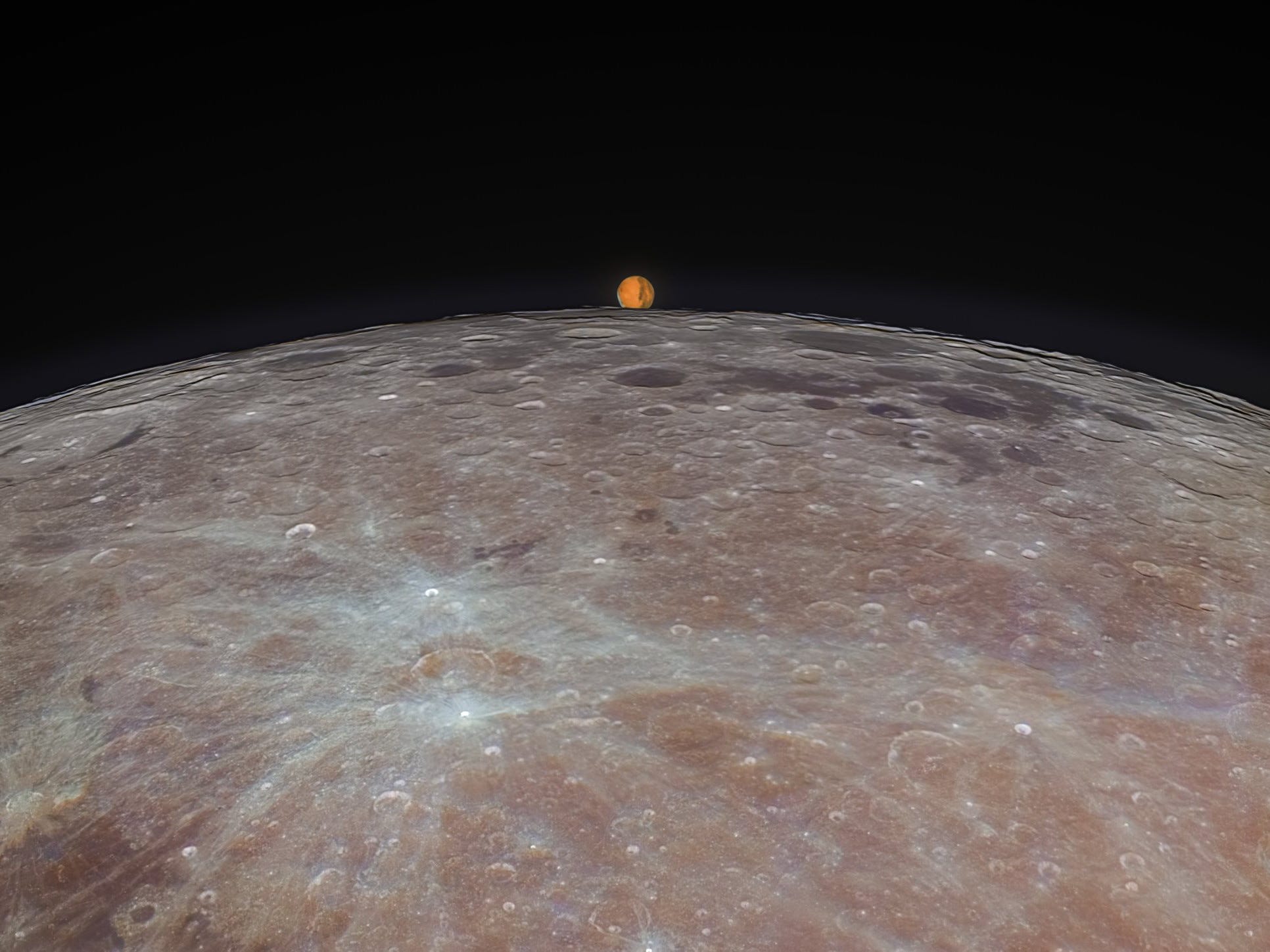
To me, this awesome picture is the new Earthrise. It says to me that we're going back to the Moon to stay and thrive, and then we'll make a new home for humanity on Mars. And then we’ll expand to the planets and the moons of our solar system. And then to the stars.
I recently found another super inspiring space picture:
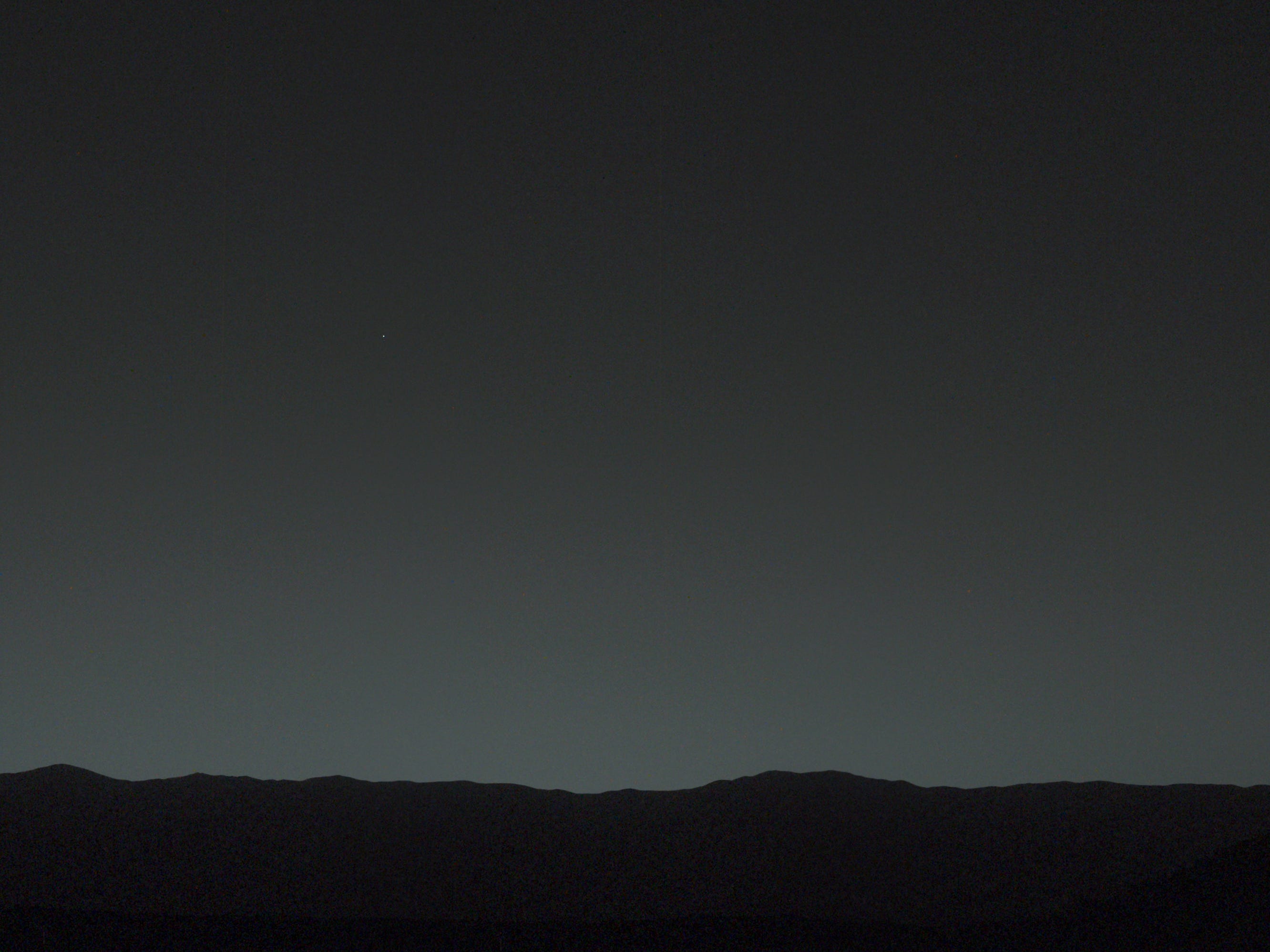
This view of the twilight sky and Martian horizon taken by NASA's Curiosity Mars rover in 2014 includes Earth as the brightest point of light in the night sky. Earth is a little left of center in the image, and our moon is just below Earth. A human observer with normal vision, if standing on Mars, could easily see Earth and the moon as two distinct, bright evening stars.
Our grandchildren and mind children will see the Earth in the Martian night sky from their wonderful cities on Mars. I think it is important to include our mind children, the artificial intelligences (AIs) that will first join us in the settlement of the solar system, and then take over and lead our expansion to the stars. I’ve argued that biological humans like us won’t establish an interstellar civilization. AI will, and we should internalize this realization with awe and joy.