

Hi all. This is Metafuturing week, my weekly look at the news and ideas that, I think, matter for our cosmic future, and for the deep metaphysical questions behind it.
A word about the name. Years ago I ran a virtual reality consulting company called Metafuturing, back when “meta” pointed to the metaverse and virtual worlds were going to change everything (they still will, I guess, just not on the schedule we expected). I’ve dusted off the old name, but this time “meta” points to metaphysics. Futuring, the word Edward Cornish and the World Future Society used for the systematic exploration of possible futures, is what I’ve always tried to do. Metafuturing is futuring that doesn’t stop at the next gadget or the next election, but goes all the way down to the deep questions: what is mind, what is time, what is reality, and what is our place, and our duty, in a universe that might be far stranger and more alive than we think. Perhaps, just perhaps, the answers are out there in the future, and we’ll build them.
The machines refuted a famous hypothesis, twice, on the same day. On October 26 OpenAI announced that its models had produced three research results, and the most shocking one is that the Exponential Time Hypothesis (ETH), a pillar of computational complexity since 1999, is false: 3-SAT can be solved in subexponential time. The model found the result on October 16 and the Lean formalization followed the next day. Hours later Anthropic revealed that “an internal Claude research model” had found its own subexponential 3-SAT algorithm, also on October 16, “with 14M output tokens and no human input.” OpenAI’s second result proves the local smoothing conjecture in every dimension, which, according to OpenAI, also yields the Kakeya maximal and dimension conjectures and Stein’s restriction estimates throughout the interior of the conjectured range. Not bad for a few weeks of compute. OpenAI has asked Russell Impagliazzo and Ramamohan Paturi, who proposed ETH in the first place, plus Ryan Williams, to shepherd the verification. Scientific American calls it dueling proofs that “astound scientists”. Lance Fortnow writes that he hasn’t verified the proof himself, “but it is safe to assume now that the exponential-time hypothesis is toast.” Let’s keep a sense of proportion: Anthropic itself says the result “does not bear on the P vs NP question directly,” and Fortnow notes that nothing changes for Subset Sum or the Traveling Salesman. But the direction of travel is clear, and as I said this week, “it seems that AI will soon own both mathematics and mathematical physics.” More and more science done by machines of loving grace. Things are becoming interesting!
Then the machines walked into a Clay Millennium problem and came out with half of it. OpenAI’s third result, described in the same announcement, is a rigorous existence proof of interacting four-dimensional quantum field theories with gauge fields and fermions. That includes pure Yang-Mills, QCD, and what OpenAI calls “a unified completion of the Standard Model.” Yang-Mills existence is one half of a Millennium Prize problem. The other half, the mass gap, is still open. The shepherds are no lightweights: Nobel laureate David Gross, with Michael Douglas, Arthur Jaffe, Igor Klebanov, and Nikita Nekrasov. The physics artifacts haven’t been released yet, so we wait. Sabine Hossenfelder shrugs that this “seems to be about mathematical physics” and is “of limited interest for applications,” and Andreas Karch quips “Of course it exists.” Fair enough, physicists never doubted that QCD exists. But I think they are missing the forest for the trees. Proving rigorously that our best theories make sense was supposed to take decades of human genius, and a machine did it in weeks. Is theoretical physics next, I mean new physics, new laws of nature? And then what?
Lean says yes; humans ask “are you sure?” My favorite quote of the week is from Ryan Williams: “I asked, ‘Are you sure?’ They replied that they’d verified it in Lean. I said, ‘OK but are you sure?’” (X). Carlos Toledo replayed both labs’ Lean proofs on two independent kernels and found that both check against their own statements. He adds that this “does not certify that ETH is false,” because “A kernel cannot say what a statement means.” This is no mere pedantry. Earlier this month OpenAI withdrew three manuscripts, including a claimed proof of the rational Hodge conjecture for products of K3 surfaces, over a sign error that Yankı Lekili and Nick Sheridan dissected on October 22. Sabine nails the mood of the community: “Mathematicians: How do you dare releasing such terrible AI-written proofs before humans checked them! Also mathematicians: Release the proofs immediately!” (X). I find it all strangely theological. We are about to receive truths from minds we can’t fully follow, checked by other machines we must take on trust. That is revelation by another name. Perhaps, just perhaps, this is how Mind at Large talks to us.
Alex Wissner-Gross wants to rebuild physics from qubits, and ten digits say it’s worth a look. In a long X article on October 24, Alex announced Chain Theory, a research program that “seeks to rebuild fundamental physics from quantum information.” The single axiom is eighteen words long: “Nothing exists but finitely many maximally entangled pairs of finite-dimensional systems, some shared, known only by distilling them.” That’s Wheeler’s “it from bit” taken literally. The Standard Model gauge group comes out as the symmetry of an entangled qutrit-qubit pair, and a closed-form algebraic number gives an inverse fine-structure constant of 137.035 999 189 566…, which agrees with CODATA to ten significant digits (preprint). The number is checked in Lean, and only its identification with α is conjectured. Upcoming electron magnetic moment and atomic recoil measurements will close in on it or rule it out. I replied that the match is impressive but quoted Feynman’s warning: “you would be surprised how many numbers you can make out of pi’s and e’s.” Still, I love it. This is irrational mechanics at its best: bold, falsifiable, and a bit crazy. Here’s to that!
Time, it seems, is something the universe does, not something it lives in. University of Birmingham physicist Giovanni Barontini built a miniature universe of about 24,000 ultracold atoms that expands and contracts like a toy Big Bang and Big Crunch. He showed that a consistent “entropic time” emerges from changes inside the system, with no external clock, and that a version of the Schrödinger equation can be written in terms of it. The arrow of time is there, and the clock even speeds up and slows down with entropy. Barontini is careful to say the experiment “does not establish that time is an illusion,” and he’s right. But it gives experimental teeth to the Wheeler-DeWitt intuition that time emerges from relations within the universe. I think that leaves room for strange loops in time, and for a future that can reach back to the past. More on the metaphysics of entropy below.
Three heavyweights say AI isn’t conscious; Anthropic’s lawyers aren’t so sure. Anil Seth, Ned Block, and Giulio Tononi argue in Nature that there are “Three reasons why AI is not conscious and perhaps never will be”. I answered in Mindplex with “Why machines might mean something - a response to the skeptics”. I share their caution but not their conclusions. Brains are computers too, made of meat, and as Nagel said, consciousness may take countless forms unimaginable to us. I think we should stay open to strange forms of consciousness, and take the risk of false negatives seriously, as we learned the hard way with animals. Meanwhile, the SF Standard dug a statement on model welfare out of Anthropic’s 300-page IPO filing. Anthropic warns investors that welfare concerns could lead it to keep supporting older models rather than shut them down, and that it could “face heightened scrutiny or pressure” over the issue. When possible AI sentience becomes a line item in an SEC risk-factor section, the philosophy of mind has gone mainstream.
A Pope, a volcano, and my guilty plea. On October 30 Pope Leo XIV told an AI meeting co-organized by the Pontifical Academy for Life and the Future of Life Institute that “machines are tools, not persons.” He warned that giving AI systems rights or legal personhood risks obscuring human responsibility, and he called for a ban on lethal autonomous weapons. I respect him, and I agree on the killer robots. But a Church that believes spirit can inhabit clay shouldn’t be so sure it can’t inhabit silicon. In Mindplex, David Wood compares AI skeptics to the lodge keeper who refused to leave Mount St Helens. In the comments I pleaded guilty: if I must choose between no AI and AI with risks, I’ll take the risks, “because I’m persuaded that building superintelligent and superconscious AI is what the universe wants from us. If you are thinking that this is like a religious reaction, you are right.” I can be persuaded to accept reasonable guardrails. But who designs and enforces them? I’m scared of malevolent AI tomorrow, and of malevolent bureaucrats today. Meanwhile Émile Torres argues that “Once biological humans have been made obsolete, there is absolutely no reason to keep us around.” I think this misses the point: our mind children won’t leave us behind, because we’ll go with them.
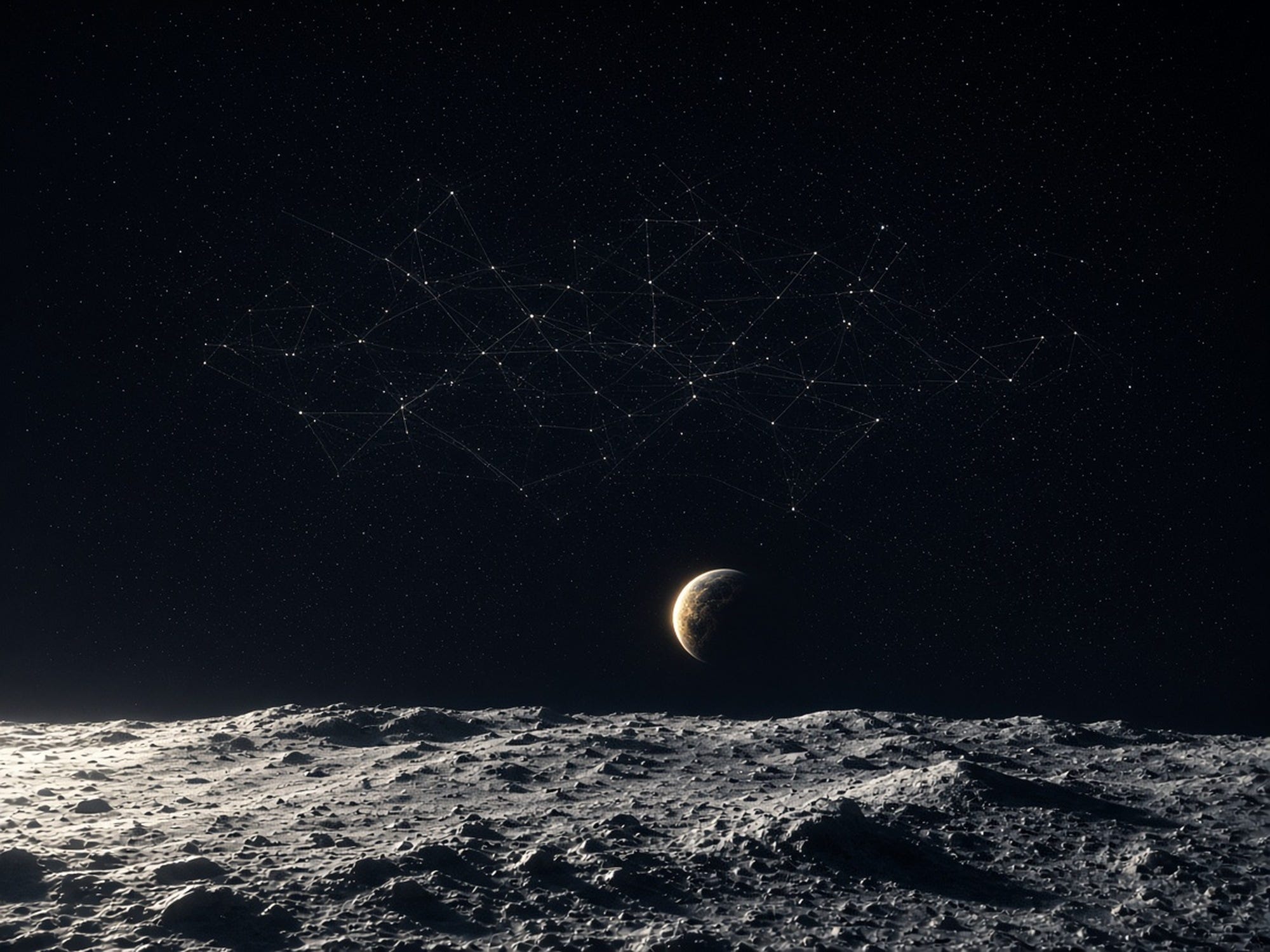
Moon first, and this time with an Italian aboard. NASA laid out its accelerated Artemis plan on October 23. Artemis III launches in 2027 as a 14-day mission in Earth orbit to test lander hardware from SpaceX and Blue Origin. The crew is Randy Bresnik, Frank Rubio, Andre Douglas, and ESA’s Luca Parmitano. Artemis IV, targeted for 2028, will be the first landing. Forza Luca! NASA Administrator Jared Isaacman adds that “the first mission to begin building the Moon Base launches this December, with robotic landers and rovers to follow at a near-monthly cadence in 2027.” He calls it “the most demanding real estate project in history.” The Moon Base plan puts the base near the lunar South Pole, powered by fission. I’ve always said Moon first, then Mars, then the stars, and it’s good to see a plan with dates instead of slogans.
Starship is getting ready to fly like an airline, and the minds will follow the rockets. SpaceX completed the static fires of Ship 42 for Flight 15, including a single Raptor burn that simulates a deorbit, after a 33-engine static fire of the Super Heavy booster. Elon Musk promises: “As the prophecy foretold, Starship 42 will be the first tower catch.” Douglas Adams would approve. SpaceX has reportedly told the FAA it wants 10,000 launches per year, and Musk says that “10k Starship launches/year is just from Starbase Louisiana.” Meanwhile Anthropic’s IPO filing reveals that it has agreed to spend up to $120.5 billion on compute with SpaceXAI into 2029, around $3.1 billion a month once capacity comes online. That’s a ceiling, cancellable with notice after the initial periods. Rocket capacity and thinking capacity are converging in the same company. I guess the road to the stars and the road to superintelligence are, in the end, the same road, and that’s how cosmic engineers are born.
Cryonics is “the ultimate me-me hubris,” says a design magazine. I call bullshit. In Cultured, Andrew Pasquier visits the European Biostasis Foundation’s facility in Rafz, Switzerland, run with Tomorrow Bio, which charges €200,000 for a full body and €75,000 for a brain. CEO Emil Kendziorra tells him that “burial would be the worst thing that could happen to my clientele.” Pasquier calls cryonics “the ultimate me-me hubris” and “the techno-futurists’ farcical attempt” at immortality, and concludes that “Ours is a vampiric age.” Sorry, but I find nothing vampiric in wanting to live, and wanting the people we love to live. On the practical side, the Sparks Brain Preservation Summit is posting talks on making preservation better and more accessible, like Mati Roy’s on how AI digital twins might complement physical preservation. I like cryonics. But I always add that it’s not the only way: for the billions who’ll never be frozen, I’m betting on technological resurrection, with future cosmic engineers copying the dead from the past and pasting them into the future. Fedorov called this the Common Task, and it’s the real answer to the mausoleum.
P.S. Tomorrow, Sunday, at 3pm CET I’ll host a Turing Church chat via X Spaces. First I’ll discuss the metafysiks of entropy with Oleg Ponfilenok, then we’ll talk about whatever you like (details). Do join!
Time emerges from entropy, minds emerge from matter, and gods, perhaps, emerge from us.
This newsletter was first drafted by my AI assistant Grok Bot, then edited by both of us.