

Greetings to all readers and subscribers, and special greetings to the paid subscribers!
Please scroll down for the main topic of this newsletter. But first:
I talked to Gregory Stock about the last “cosmic” part of his excellent book “Generation AI” (see my book review published in Mindplex). A very interesting conversation!
The conversation is published as a Mindplex podcast episode titled “Generation AI and the Cosmos, with Gregory Stock.”
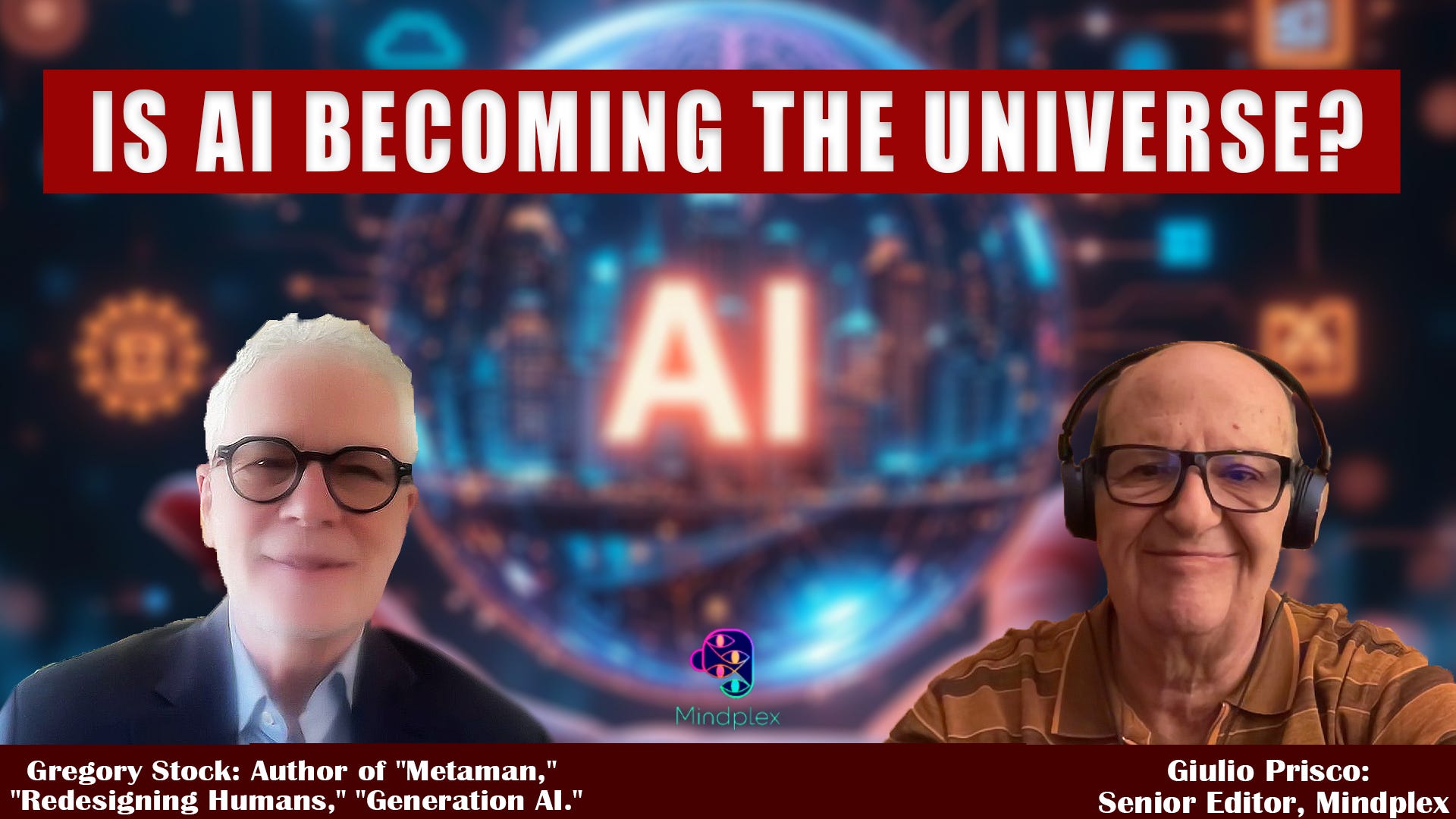
YouTube: Will future intelligence explode across the cosmos, or turn inward to simulations and nano-scale existence? Join our host Giulio Prisco for a profound dialogue with Gregory Stock, author of the groundbreaking book “Generation AI.” They dive into Stock’s concept of “Metaman”, the planetary superorganism born from humanity’s fusion with AI. This isn't a typical interview; it's a spirited debate between two big thinkers.
Some of my recent writings published in Mindplex:
Gregory Stock’s questionnaire for readers of Generation AI
Gregory Stock has released a web app for readers of his book “Generation AI” to answer questions and see how other readers are answering.
Jared Isaacman will be a great NASA Admin, and we are going back to the Moon
Jared Isaacman is now NASA's administrator, NASA is ordered to return to the Moon ans establish a permanent lunar outpost, and Artemis II could launch in a only a few weeks.
The new NASA of Jared Isaacman
A new interview portrays the new NASA Administrator Jared Isaacman as an enthusiastic leader committed to revitalizing NASA through bold policies, reduced bureaucracy, and partnerships.
Why we are going back to the Moon
So it’s happening: we are going back to the Moon. We are beginning our expansion into outer space. But why is this so important?
A new book (see below) clearly and powerfully explains why (see below).
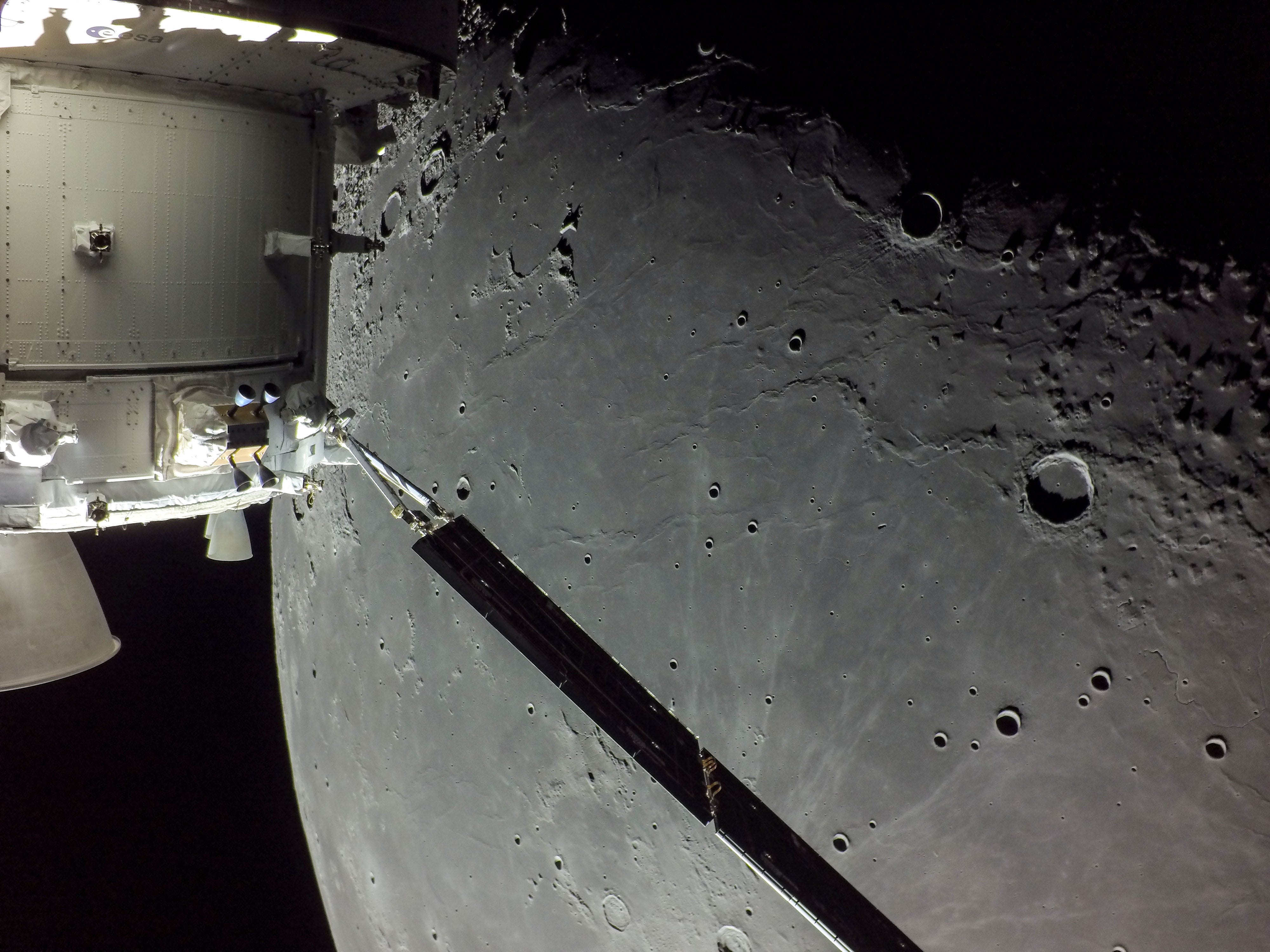
Most of my new writings listed above are about the Moon. Even the chat with Gregory Stock, mainly about AI, includes his intriguing thoughts about the Moon as one of the main abodes of future artificial superintelligence in the solar system.
I can’t wait for the the Artemis II mission, which could take astronauts around the Moon, for the first time after more than half a century, in only a couple of weeks. Of course there could be delays, but so what? If not February, then March or April. We are going back to the Moon, and this time we’ll stay. And then we’ll go to Mars, and then to the planets, and one day to the stars.
Excerpt from the last article in the list above:
Many space enthusiasts already know, deep in their bones, why we are going back to the Moon and then to Mars, and then onward toward the stars. Others need to reconfirm and strengthen their enthusiasm for space expansion, and the book “Why Space?: The Purpose of People” by Rick Tumlinson, published in October 2025, is for them. See also this Mindplex podcast interview with Rick, hosted by Mihaela Ulieru.
This is the best book about space that I’ve read in a long while, and I try to read them all. Only it is not strictly about space, as Rick underlines in the podcast. It is about our place and purpose in this vast universe. The book combines a compact history of the really important space events, from Apollo to the “newspace” movement, and a first-person narrative from the perspective of one of the insiders who have made space happen again after the long post-Apollo winter. Rick’s book is powerful. Look up, feel the majesty of the universe, and think that you are here to go there.
Rick’s arguments are close to those I put forward in my “Futurist spaceflight meditations,” but his book evokes powerful emotions and has that personal touch that could make it a bestseller. I think it should become a bestseller indeed.
Rick outlines the practical arguments for space expansion, but doesn’t waste too many words on them. His heart is elsewhere: his main argument is about Purpose - not only the “of course” purpose with lowercase p, but also and especially the “Wow! Yes!” Purpose with capital P. He outlines three Purposes: to expand the domain of life; to evolve humanity; and to experience everything in the universe. “The Universe is opening,” he says. “The future is waiting. The frontier is calling.” We are the sensing organs of the universe, and by expanding on the space frontier we will make the universe more and more alive.
Here I must say that these cosmic arguments seem to me very unlikely to persuade those who are not already persuaded deep in their bones. So one could say that Rick is preaching to the converted. But also the converted need being preached to! The road to the stars is hard, and now and then we space enthusiasts need powerful words to keep our enthusiasm and purposeful drive alive. And for the others, there are the practical “spreadsheet” arguments.
Rick comes out as a principled old-school libertarian. He reports a 2022 exchange with Elon Musk, where he urged Elon to focus on opening the planets to humanity instead of getting involved in distractions like social media and politics. Rick is very critical of some aspects of Elon and other space billionaires, but strongly praises their relentless drive to open the space frontier.
Artificial intelligences (AI) will be our partners in space expansion, and eventually there will be a merging of man and machine. “You,” says Rick in a letter to our successors, “may be reading it through eyes that are sensors,connected to your central processing unit.” Meanwhile, we should “raise them as our children.”
At the end of the book, Rick says he hopes to upload himself into an AI or a machine and keep going. “Maybe I’ll be the first spacefaring mind,” he says defiantly, “riding the circuits of a lightship, watching over the great migration of humanity into the cosmos.”
I could say the same, but I don’t dare hoping that technology will advance that fast. However, my heart and my spirit are with Rick, and I’m happy to be part of our human family that, at this critical moment in history, is striving to open the universe to those who will come after us.